
Optimisation and Analytics
Read more




Continental offers a broad portfolio of tyres for the commercial vehicle sector, covering applications from construction and mixed-service operations to long-haul transport, distribution and passenger transport. Each product is developed with specific operational requirements in mind, incorporating features designed to support vehicle performance, efficiency and safety across a range of operating conditions.
This page has been created to help answer some of the most frequently asked questions about Continental's commercial vehicle tyre range and related solutions. Topics including products, technologies, sustainability initiatives and services will be updated regularly, providing a useful source of information and insights for fleet operators and industry professionals.
While some lower-cost, single-life tyres may offer a reduced upfront purchase price, they are not always designed for retreading, which can limit opportunities to extend casing life and maximise value over the tyre's lifecycle. Premium tyres, such as those manufactured by Continental, are developed with retreadability in mind, helping fleets make greater use of their tyre assets.
Retreading plays an important role within Continental's commercial vehicle offering, across both the ContiRe and Bandvulc product ranges. By extending the useful life of suitable tyre casings, retreading can help reduce raw material consumption and tyre waste compared with replacing tyres with new products alone.
In addition to these sustainability benefits, retreading can offer an economical solution for fleets when managed as part of an effective tyre lifecycle strategy. Depending on the specification and application, a retread may cost less than a comparable new tyre, helping operators manage tyre expenditure while maintaining the performance characteristics required for their operation.
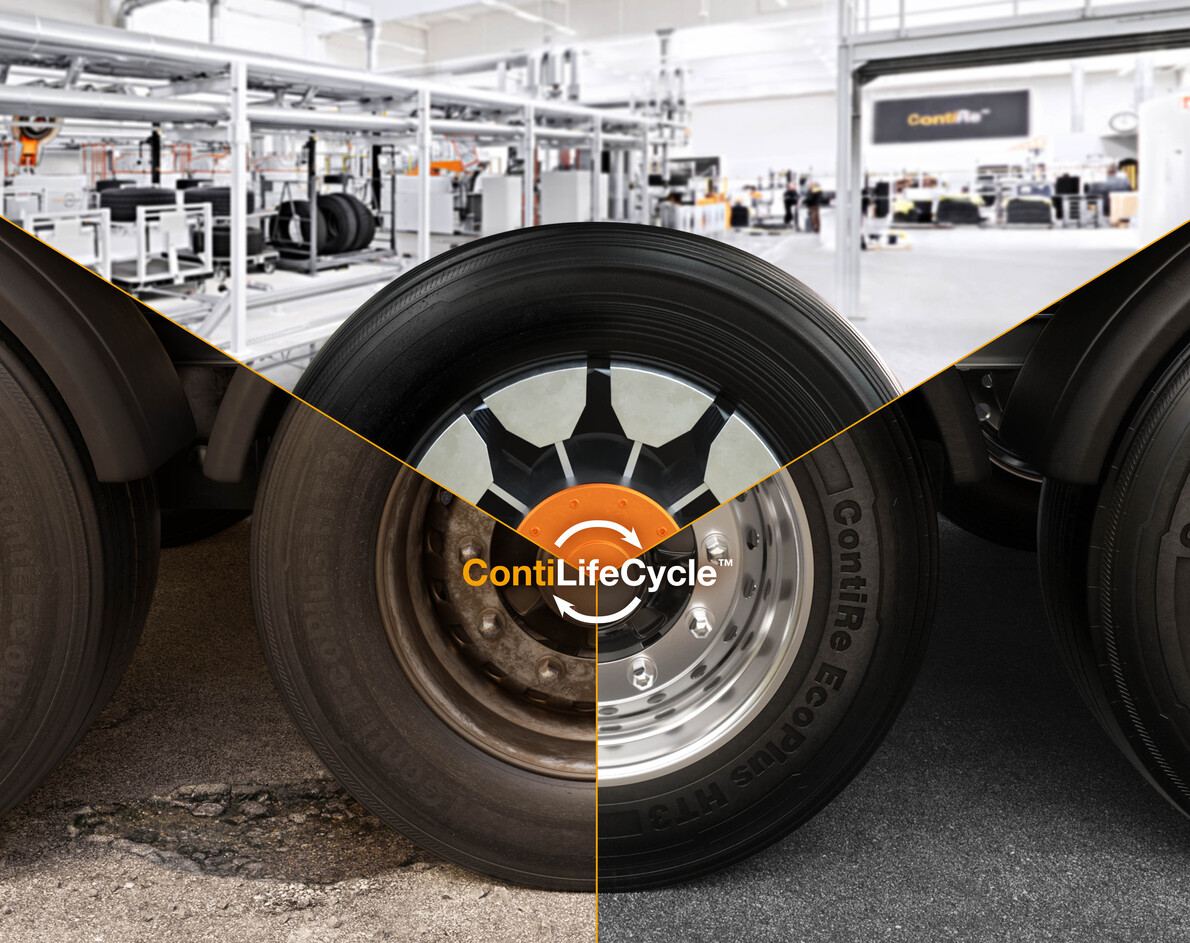
Retreading helps extend the service life of suitable tyre casings and can reduce the amount of raw materials required compared with manufacturing a new tyre. In Continental's retreading process, up to 80% of the original tyre structure may be retained by reusing the casing, helping to reduce demand for certain raw materials.
Compared with the production of a new tyre, a retread can save approximately 30kg of rubber compound, up to 20kg of steel and around 60kg of CO₂ per tyre, based on Continental's internal calculations and product specifications. Actual savings may vary depending on tyre size, casing condition and application.
Retreading can also contribute to a more circular approach to tyre management by extending casing use and reducing the number of tyres entering the waste stream. By helping to reduce the volume of worn tyres requiring disposal, retreading supports efforts to minimise the environmental impact associated with end-of-life tyre processing.
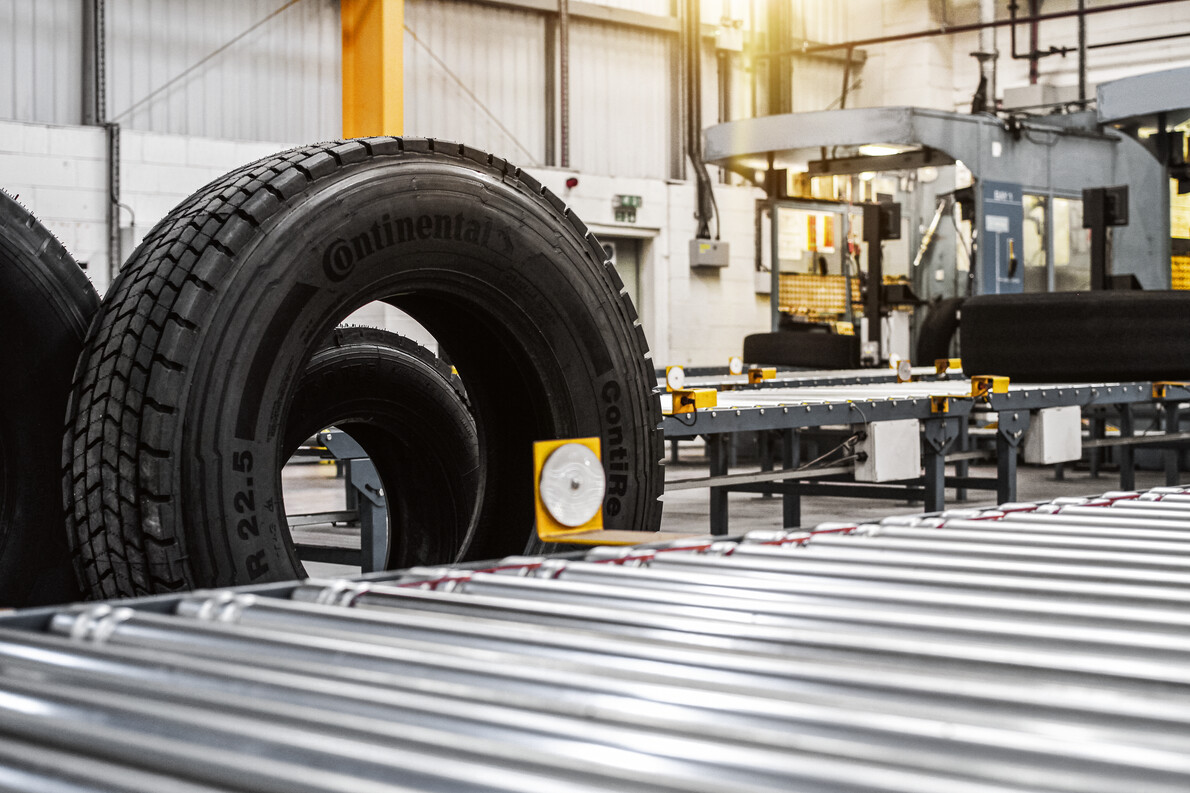
Customer requirements are an important consideration in the development of Continental's commercial vehicle tyres. Different operations place different demands on tyres, whether fleets are prioritising fuel efficiency through low rolling resistance, durability, mileage potential or traction in specific operating conditions. As a result, tyres are developed to meet the needs of a wide range of applications.
For example, vehicles operating on construction sites and mixed-service routes may require tyres with tread patterns and sidewall designs developed to help improve durability and resistance to damage in demanding environments. These features are selected according to the intended application and operating conditions.
Additional development criteria are defined through Continental's product requirements process and include factors such as exterior noise, wet-weather performance, braking performance and resistance to aquaplaning. Tyres must also meet applicable regulatory requirements relating to areas such as rolling resistance, wet grip and pass-by noise, alongside internal standards for durability and service life.
Retreadability is another important consideration in the development of commercial vehicle tyres, helping operators maximise the value of suitable casings as part of a tyre lifecycle strategy. Alongside performance and operational requirements, factors such as total cost of ownership and resource efficiency are also key considerations for many fleet operators.
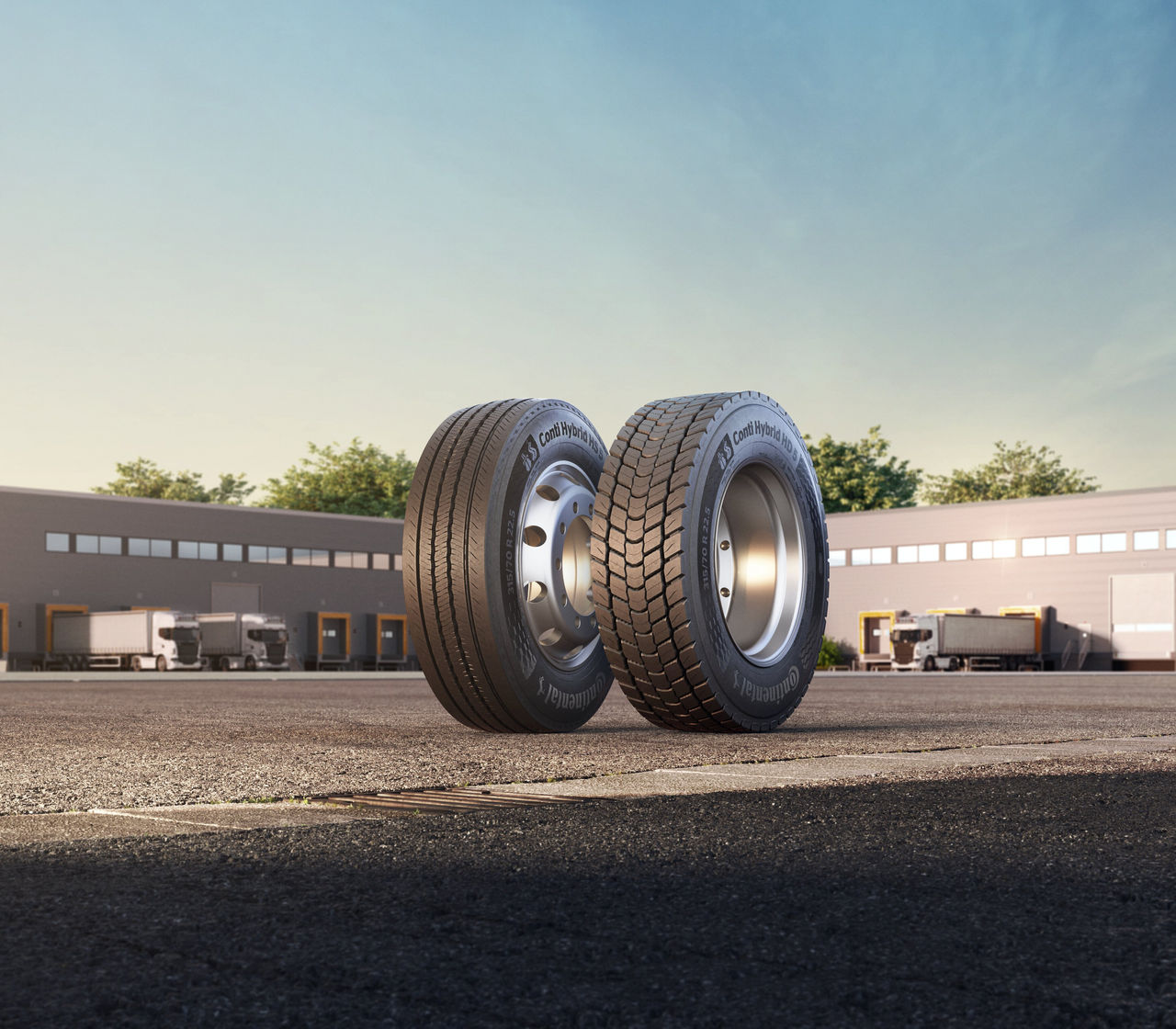
Underinflation of tyres significantly affects rolling resistance, increasing both fuel consumption and carbon emissions, as well as intensifying tyre wear and even reducing a tyre’s service life – all of which adversely affect operating costs. The use of tyre pressure monitoring systems (TPMS), such as ContiConnect, minimises these issues, by ensuring that each tyre is operating at the correct pressure and temperature. Such systems work best when a sensor is placed within the tyre itself, transmitting visible and audible warnings to a display in the cab, and alerting drivers to potential problems. ContiConnect can also alert office-based fleet support staff to any problems which occur. Warnings provided from such accurate TPMS systems not only help avoid dangerous tyre blowouts, but also help prevent costly vehicle downtime, keeping the trucks on the road.
But safety warning is only one benefit of a TPMS system. Tyres are directly responsible for 5% of the total operating costs but have an influence over a huge 50% of overall costs because of the effect tyre rolling resistance has on fuel use, and subsequent maintenance costs. Simply put, tyres which are operating at the correct pressure, maximise fleet efficiency and save money. What is more, the added advantage of tyres which run efficiently is that fuel consumption is lowered, and tyre wear is reduced - both of which ensure CO2 emissions are cut, to help protect the environment.
The ContiConnect technology has been successfully integrated within many of our fleet customers operations for many years from the more traditional road trunking operation to arduous tipper applications and has proven itself to be one of the most robust and reliable TPMS systems on the market.
We offer a range of ContiConnect digital tyre monitoring solutions and work closely with each operator to identify the system best suited to their operational requirements.
Every solution is built around ContiConnect tyre pressure sensors, which are fitted to the tyre's inner liner. These sensors measure tyre pressure and temperature and transmit the data for monitoring and analysis. Depending on the solution selected, information can be displayed directly in the driver's cab, collected automatically as vehicles return to the depot via the yard-based system, or accessed remotely through ContiConnect Live, a web-based platform that enables fleet managers to monitor tyre conditions across their fleet from a central location.
The availability of real-time tyre data can help operators identify potential tyre-related issues at an early stage, supporting more informed maintenance planning and tyre management practices.
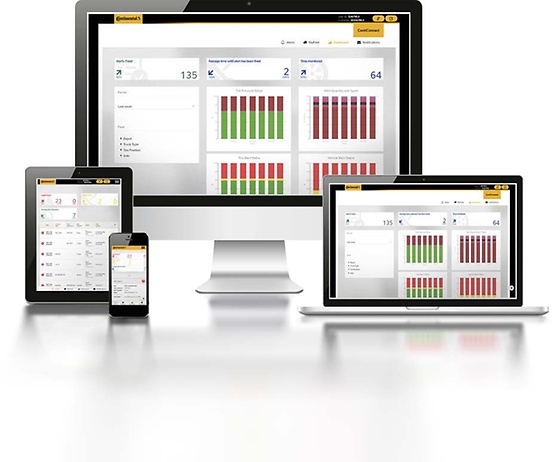
We offer a range of ContiConnect digital tyre monitoring solutions and work closely with each operator to identify the system best suited to their operational requirements.
Every solution is built around ContiConnect tyre pressure sensors, which are fitted to the tyre's inner liner. These sensors measure tyre pressure and temperature and transmit the data for monitoring and analysis. Depending on the solution selected, information can be displayed directly in the driver's cab, collected automatically as vehicles return to the depot via the yard-based system, or accessed remotely through ContiConnect Live, a web-based platform that enables fleet managers to monitor tyre conditions across their fleet from a central location.
The availability of real-time tyre data can help operators identify potential tyre-related issues at an early stage, supporting more informed maintenance planning and tyre management practices.
Continental continues to develop tyre monitoring technologies that provide fleets with greater visibility of tyre condition and support more informed maintenance decisions. Today's tyre monitoring systems can provide data on parameters such as tyre pressure and temperature, while future developments may offer additional insights, including tread depth and tyre lifecycle information.
As tyre technology continues to evolve, maintaining the correct inflation pressure remains an important factor in achieving the intended performance characteristics of a tyre. Incorrect tyre pressure can affect factors such as rolling resistance, tyre wear and overall tyre utilisation, regardless of the technology incorporated within the tyre.
Tyre pressure monitoring solutions, such as ContiConnect, are designed to help operators monitor tyre condition in real time and identify potential issues at an earlier stage. By supporting effective tyre maintenance practices, these systems can contribute to improved tyre utilisation, operational efficiency and vehicle safety, while also supporting fleet sustainability objectives. The benefits achieved will depend on factors including vehicle application, operating conditions and maintenance procedures.
Tyre development requires careful balancing of multiple performance characteristics, many of which can influence one another. Factors such as wet grip, durability, rolling resistance, mileage potential and traction must all be considered during the development process. Optimising one attribute often involves evaluating its impact on other aspects of performance.
The priority given to each characteristic depends on the tyre's intended application and the operating environment it is designed for. For example, the requirements of a long-haul transport tyre can differ significantly from those of a tyre developed for regional distribution, construction or mixed-service operations.
To support these varying requirements, modern premium tyres incorporate advanced compound technologies, including silica-based compounds, alongside carefully engineered tread and casing designs. These elements work together to help deliver the performance characteristics required for specific commercial vehicle applications and operating conditions.
Historically, reducing rolling resistance to support lower fuel consumption and CO₂ emissions has often involved a trade-off with tyre mileage performance. A key focus in tyre development is to address this challenge by balancing energy efficiency with durability, helping operators realise the benefits of lower rolling resistance without unnecessarily increasing tyre replacement frequency.
To support this objective, Continental continues to develop its tyre technologies through advances in compound formulations, alongside ongoing optimisation of tread pattern design, tyre contour and casing construction. By combining these developments, Continental aims to deliver tyres that offer a balanced approach to fuel efficiency, mileage potential and overall operational performance across a range of applications.
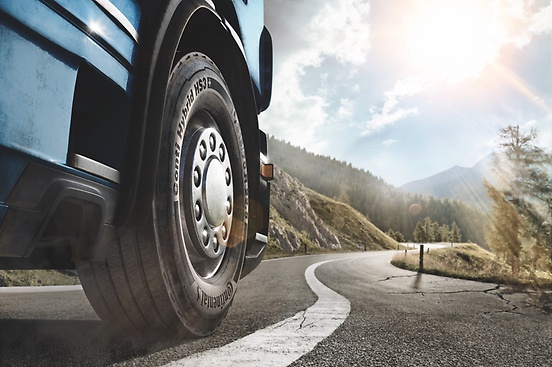
The tread compound plays an important role in determining how a tyre interacts with the road surface at a microscopic level and is therefore a key consideration in tyre design. Compound selection can influence a range of performance characteristics, including grip, tyre wear and rolling resistance.
Tread pattern design and compound technology are developed together, with each contributing to the overall performance profile of the tyre. Achieving the desired balance of characteristics requires careful optimisation of both elements according to the tyre's intended application.
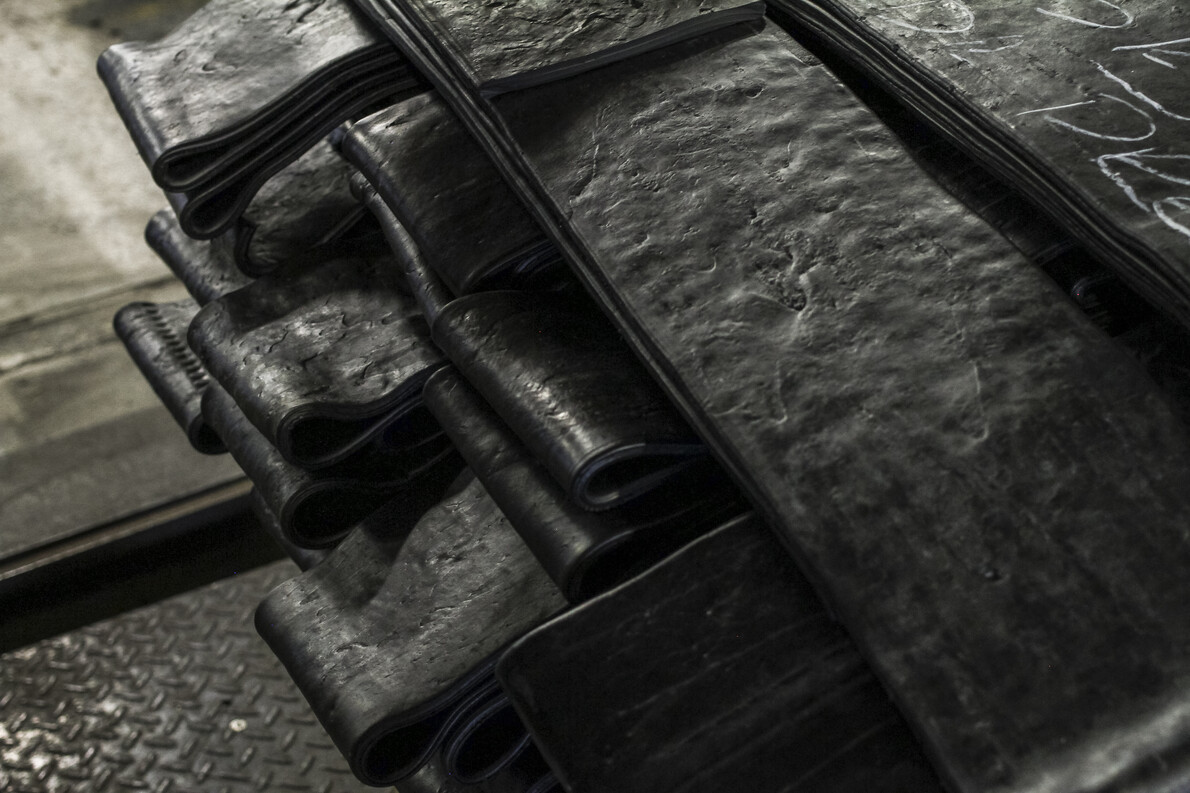
The carcass construction is another important factor, contributing to the tyre's durability, load-carrying capability and overall performance. By combining compound development, tread design and casing construction, tyre engineers can tailor tyres to meet the specific requirements of different commercial vehicle applications and operating conditions.



.jpg/jcr:content/renditions/cq5dam.web.1280.1280.jpeg)
