# Vehicle Types
Electric car maintenance – the complete guide for EV owners
Essential tips for the optimal EV driving experience
While electric vehicles (EVs) require less maintenance than traditional cars, they are not maintenance-free. To ensure longevity, safety, and a smooth driving experience, EV owners must pay meticulous attention to specific components.
This guide covers the essentials of electric car maintenance – from preserving battery health and managing heavy tyre wear to understanding regenerative braking.
Do electric vehicles need maintenance? EV vs. combustion engine
Understanding the unique needs of electric, hybrid, and internal combustion vehicles is essential. While electric vehicles (EVs) have fewer moving parts than traditional cars, they still require dedicated care to operate safely and efficiently. The maintenance focus simply shifts from the engine block to the battery and tyres.
Here is how maintenance demands evolve across different vehicle types:
Internal combustion engine (ICE) vehicles
Traditional cars require proactive and frequent mechanical maintenance. The strategy revolves around regular mileage intervals to prevent engine wear.
Key tasks: Routine oil changes, replacing fuel and air filters, replacing spark plugs, and regular exhaust system checks.
Focus: Preventing mechanical friction and heat damage in the engine.
Hybrid vehicles (HEV & PHEV)
Hybrids integrate an internal combustion engine with an electric motor and a high-voltage battery. Because they have both systems, their maintenance is a blend of both worlds.
Key tasks: Regular checks on the gas engine (oil, filters) combined with EV maintenance guidelines for the electric motor.
Focus: Balancing battery health with the upkeep of traditional mechanical components.
Battery electric vehicles (BEVs)
Fully electric vehicles eliminate the need for oil changes, exhaust repairs, and spark plugs. However, this does not mean they are maintenance-free.
Key tasks: Battery maintenance, thermal management (temperature control), and specialised care for the electric motor and high-voltage charging system.
Focus: Because EVs produce high instantaneous torque and carry heavy battery packs, the maintenance focus shifts heavily toward tyre wear, suspension, and battery health.
"Our tyres are fitted onto many of the world's most popular EV brands and models, ranging from premium and sports cars and SUVs to volume models"
Dr. Holger Lange, Head of R&D Original Equipment Passenger
How much does electric car maintenance cost?
When it comes to the total cost of ownership (TCO), electric vehicles hold a significant advantage over internal combustion engine (ICE) vehicles. On average, EV maintenance costs are about 50% lower than those of a comparable gasoline or diesel car. Instead of paying for frequent, high-ticket mechanical services, EV owners generally spend about half as much annually. Over a typical ownership period, this translates to substantial long-term savings.
Where you save money
The primary reason electric cars are cheaper to maintain is the elimination of routine mechanical engine servicing. With an EV, you completely avoid the costs of:
- Engine oil and oil filter changes
- Spark plug replacements
- Timing belt and fan belt replacements
- Exhaust system repairs
- Multi-gear transmission fluid flushes
Additionally, because regenerative braking handles most of the deceleration, your brake pads and discs suffer far less wear. It is not uncommon for EV brake pads to last well over 80,000 miles, eliminating another frequent expense associated with petrol cars.
Where you still spend money
While the mechanical upkeep is significantly cheaper, electric car owners should still budget for a few specific wear-and-tear items:
- Tyres: Because EVs are heavier and deliver instant torque, tyre wear is accelerated. Premium tyres (like the Continental EcoContact 6) are an essential investment for safety and range, and you may need to replace them more frequently than those on a lighter gasoline car.
- 12V auxiliary battery: Just like a gasoline car, the standard 12V battery needs to be replaced every 3 to 7 years.
- Cabin air filters and fluids: Regularly topping off windshield washer fluid and replacing the cabin air filter every 1 to 2 years remain standard costs.
The core of electric car maintenance: the battery
When discussing EV batteries, it is important to distinguish between the high-voltage traction battery (which powers the motor) and the smaller 12V auxiliary battery.
The 12V battery powers accessory systems like lights, windshield wipers, and the dashboard. If it loses its charge, the car will not start, even if the main battery is full. This battery should be checked regularly and typically replaced every 3 to 7 years.
The high-voltage traction battery, on the other hand, is built to last. The National Renewable Energy Laboratory (USA) predicts today's EV batteries will last between 12 and 15 years in moderate climates.
Complete battery failure is incredibly rare. If issues arise, repair usually involves replacing a few faulty or degraded cells rather than the entire battery pack.

Tips for EV battery health and longevity
While the battery pack requires no physical maintenance from the driver, your daily habits significantly impact its lifespan:
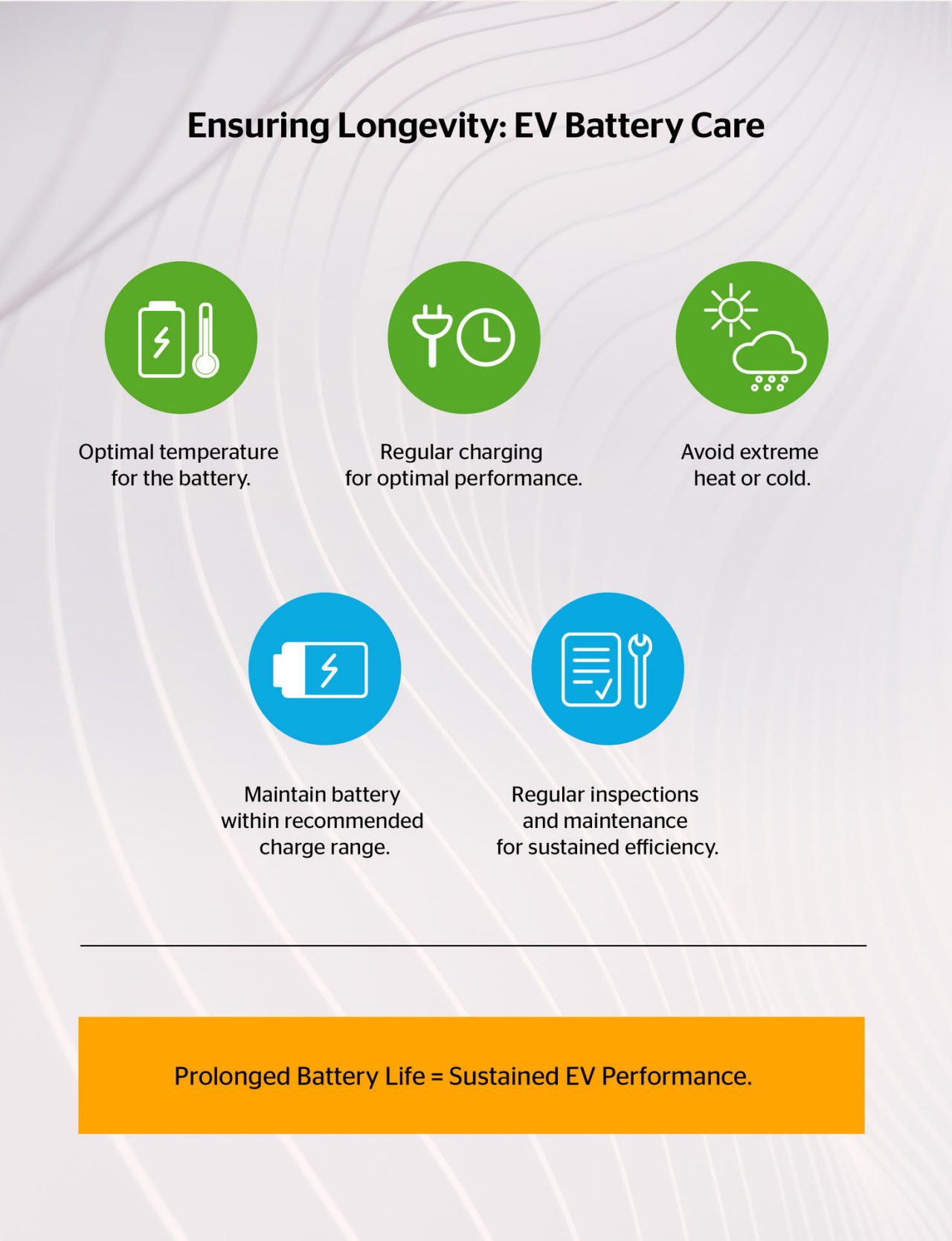
The 20 to 80% rule: Batteries degrade more quickly when charged to full capacity or depleted entirely. Maintain a daily charge between 20% and 80%.
Limit fast charging: While convenient for road trips, relying exclusively on DC fast chargers degrades battery packs at a quicker rate and costs three to four times more per kilowatt-hour than home charging.
Manage extreme temperatures: Extreme heat and cold negatively impact battery chemistry. As you prepare your car for winter, remember that freezing temperatures can reduce range, while parking in the shade during hot weather prevents the battery from overheating.
Why EV tyres require special attention
This may be obvious, but yes, you still need to replace the tyres on your EV – and likely more frequently than on a gasoline car.
The impact of weight and instant torque
One of the defining characteristics of electric vehicles is their heavy battery weight, which places significant stress on the tyres – especially on larger models like electric and hybrid SUVs. Additionally, the high instantaneous torque of electric motors requires tyres that can handle abrupt acceleration.
This combination of weight and torque often leads to accelerated tread wear and directly impacts your overall tyre mileage. Depending on your driving habits, you may need to replace your EV tyres every 20,000 to 40,000 miles.
Choosing the right tyres for your electric vehicle
To combat the wear, your EV's tyres need stronger construction and robust rubber compounds. Manufacturers like Continental have developed specific tyre solutions tailored to these conditions, such as the EcoContact 6 and UltraContact NXT. Instead of standard rubber, these EV-optimised tyres use advanced silica blends, like the Green Chili 2.0 compound, designed to handle high torque and provide extended tread life. They feature a tailored profile for confident grip on both dry and wet surfaces, while their exceptionally low rolling resistance directly translates to enhanced energy efficiency and extended electric range.
Noise reduction for an enhanced drive
Beyond physical wear, EVs present a unique acoustic challenge. Because electric motors are virtually silent, the friction between the tyres and the road becomes much more noticeable inside the cabin.
Choose tyres equipped with noise-reducing technologies, such as Continental’s ContiSilent, which significantly dampen tyre vibrations to preserve the quiet, smooth driving experience that EVs are known for.
Brakes and fluids in electric cars
Electric vehicles rely on fundamentally different braking systems and maintenance needs, making it essential to understand how regenerative braking impacts traditional components like brake pads and fluids.
Regenerative braking and brake pad wear
Unlike internal combustion vehicles, EVs use regenerative braking. The electric motor acts as a generator in reverse, converting the car's kinetic energy back into electricity to recharge the battery while slowing the vehicle down. Because of this, the physical brake pads and rotors are used far less frequently. While gasoline cars regularly need new brake pads, EV brakes can easily last over 80,000 miles.
However, because the brakes are used so infrequently, they can suffer from rust. And in areas that use salt to melt snow, manufacturers like Tesla recommend lubricating the brake calipers every 12 months or 12,500 miles.
Essential fluids to check
EVs still rely on crucial fluids that must be monitored:
- Coolant: Converting electricity into mechanical energy creates heat. EVs use a thermal management system (liquid coolant) to prevent the battery and motor from overheating. Levels and hoses should be inspected regularly (e.g., Ford recommends checking the Mustang Mach-E every six months).
- Brake fluid: Even with regenerative braking, the hydraulic brake system requires fluid. Brake fluid absorbs moisture over time and should generally be flushed and replaced every 2 to 3 years.
- Windshield washer fluid: Just like any car, this needs regular topping off.
Frequently asked questions about maintenance for electric vehicles
Yes. While EVs have roughly 90% fewer moving parts than combustion cars – meaning no oil changes, spark plugs, or exhaust repairs – they still require regular maintenance. Routine servicing focuses on tyre wear, the braking system, the battery's thermal management, cabin air filters, and inspecting the 12V auxiliary battery.
Most electric vehicles require an annual health check or a service every 10,000 to 15,000 miles.
The most frequent issues relate to tyres and the 12V battery. Due to the significant weight of the traction battery and the instant torque of the motor, EV tyres wear out faster. Additionally, the standard 12V battery – which powers the lights, wipers, and dashboard – can silently discharge or fail and usually needs replacement every 3 to 7 years.
Yes, significantly. Because they lack an engine block, clutch, and traditional transmission, electric cars cost about 50% less to maintain over their lifetime. Drivers save money by completely eliminating oil changes, fuel filters, and exhaust system repairs.
On average, maintaining an electric car costs about half as much annually compared to an equivalent combustion car. While you save heavily on mechanical servicing, it is important to budget appropriately for tyre replacements, which are often the largest routine maintenance expense for EV owners.
The main high-voltage battery requires virtually no direct physical servicing. Maintenance is handled internally by the car's automated cooling and charging systems. Service technicians will simply run a diagnostic health check on the battery during your annual visit to ensure all cells are performing optimally.
Routine battery diagnostics are standard and inexpensive. While replacing an entire battery pack is a major financial investment, it is very rare. Modern EV batteries are designed to last 12 to 15 years, and most manufacturers provide extensive warranties of 8 years or 100,000 miles. If an issue occurs, usually only a few specific cells need repairing.
Brake fluid should be inspected during every annual service and completely replaced every 2 to 3 years. Even though EVs rely heavily on regenerative braking, the brake fluid still absorbs moisture over time and degrades, making a flush necessary for optimal safety.
Yes, electric vehicles use a liquid cooling system (thermal management) to keep the battery pack and electric motor at safe operating temperatures. Manufacturers recommend inspecting the cooling system's hoses and fluid levels regularly – typically every 6 to 12 months – to prevent overheating.
To maximise range and minimise wear, check your tyre pressure monthly. Underinflated tyres increase rolling resistance and reduce battery efficiency. You should also rotate your tyres every 6,200 miles to ensure even wear. When it is time for a replacement, always opt for premium EV-specific tyres designed to handle the heavier load.