Tread depth
Read more




The tread is the part of the tyre that makes contact with the surface of the road. And if you take a look at different tyres on the market, you'll notice a great deal of variety in their tread patterns.
Why are they so different? Because a tread pattern is a unique design that enhances a vehicle with grip and handling for specific driving conditions. Just like in a detective novel, you could identify a make of tyre by the tracks it leaves on the road.
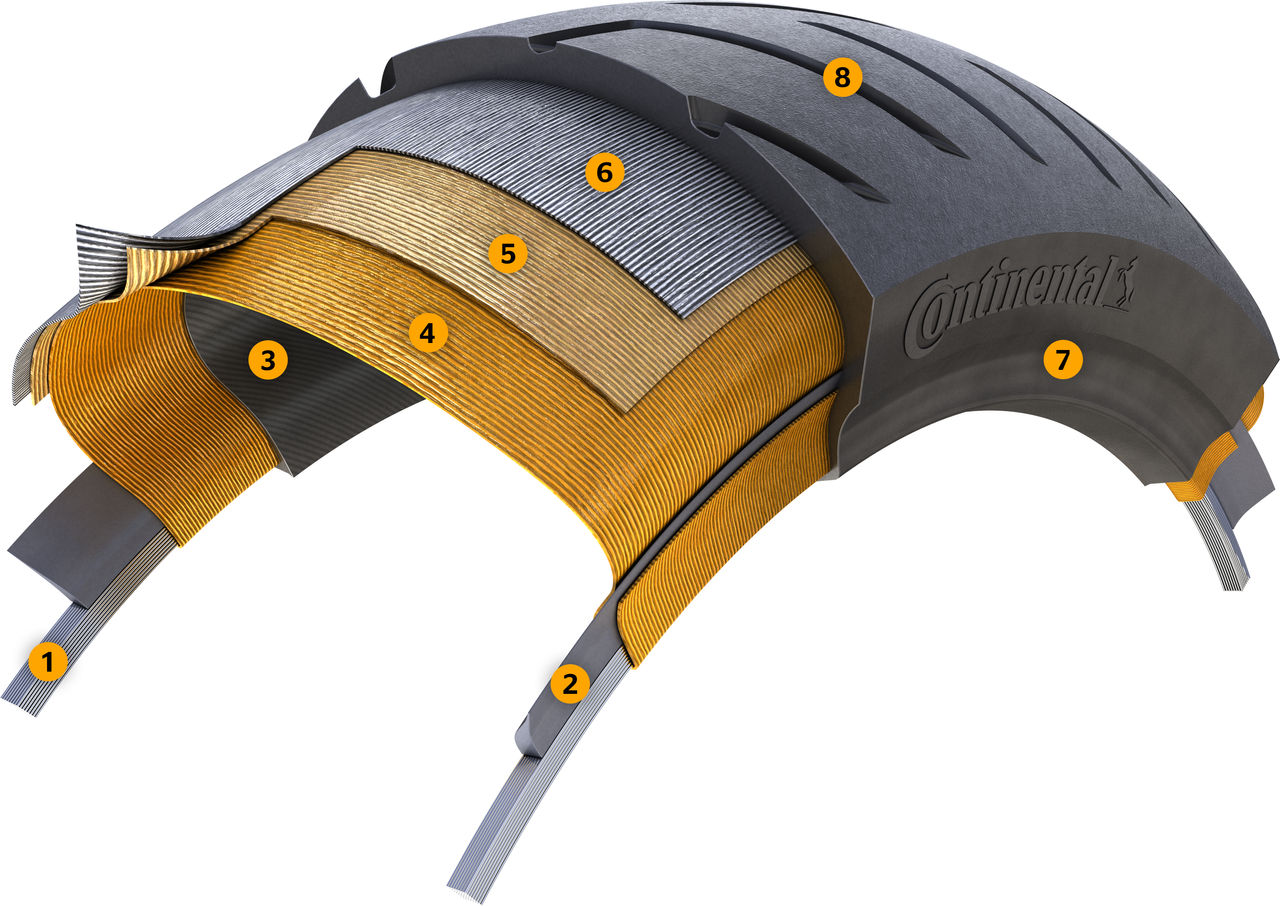
Every tyre tread has four constituent parts: ribs, grooves, blocks, and sipes. All these parts play a crucial role in providing a safe, efficient, and performative tyre.
Ribs
Grooves
Blocks
Sipes
Taken together, the ribs, grooves, tread blocks, and sipes can be arranged in a unique pattern to modulate the tyre's performance in critical areas like noise, handling, traction, and wear.
And that in turn provides tyre manufacturers with the ability to develop tread patterns to address specific driving needs like wet braking, dry handling, aquaplaning (hydroplaning) resistance, and traction on ice and snow.
How many tyre tread patterns are there? Quite a few. But broadly speaking, we can distinguish between three categories of tyre tread pattern. Which one does your car have?
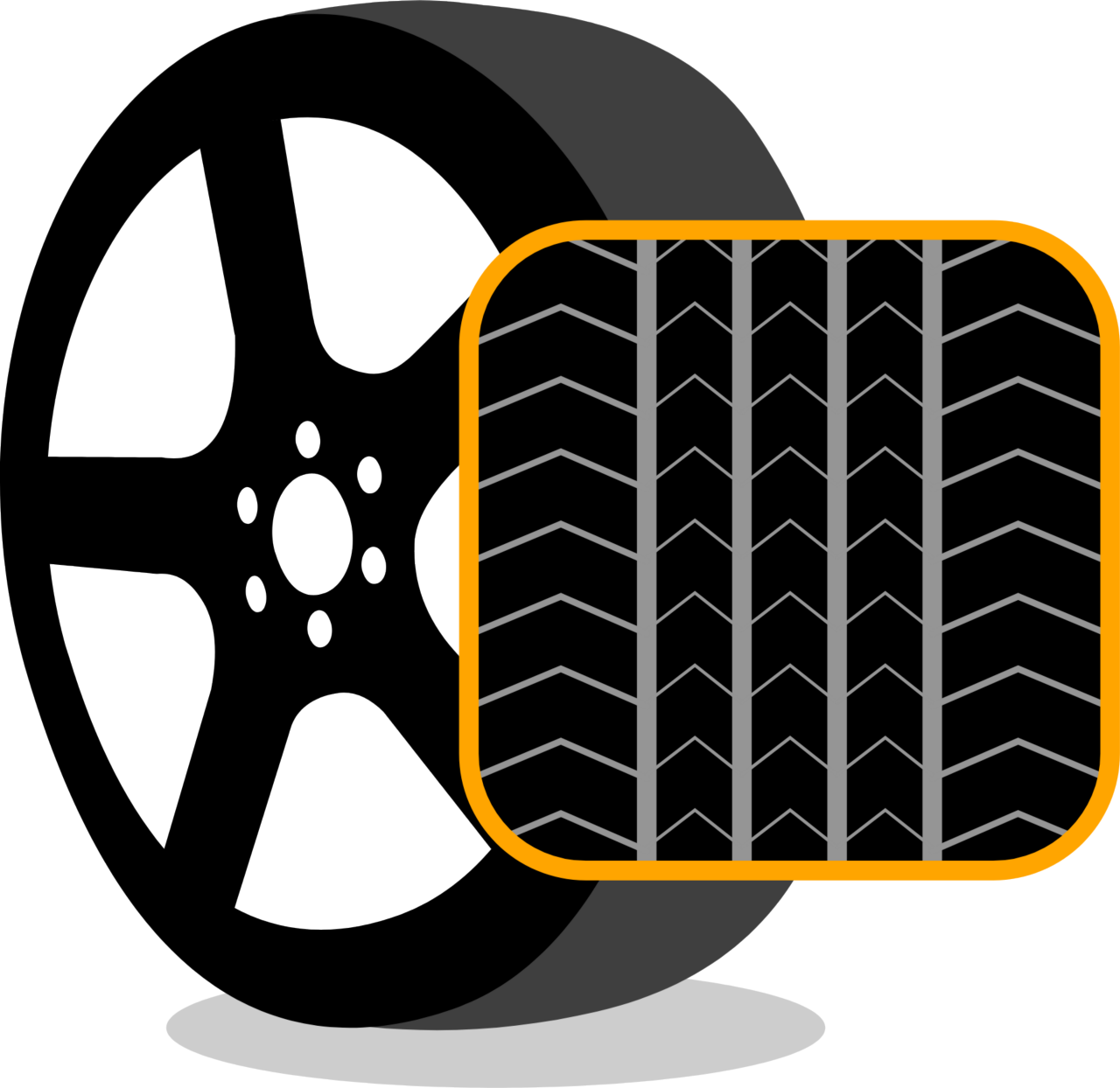
The most common type of pattern is symmetrical; it's suitable for passenger car tyres, but not for high-performance use. Tyres with this design have continuous ribs or independent tread blocks across the entire face of the tread, and both halves of the tyre feature the same pattern.
Key features:
Tyres with symmetrical patterns provide the owner of the vehicle with the most flexibility for tyre rotation without affecting day-to-day performance. They're also quiet, long-lasting, and fuel efficient. However, they are less adaptable to changing conditions on the road. So even though symmetrical patterns deliver steady grip on a dry road, they won't be as effective in wet conditions as other tyres.
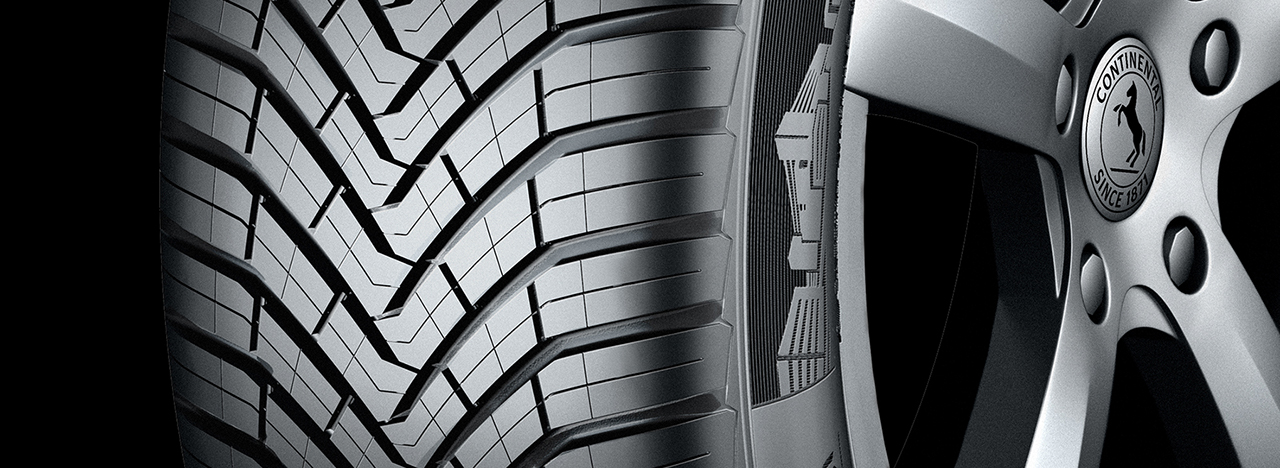
A tyre with a directional tread pattern is designed to roll forward in one direction only. It has lateral grooves that meet in the middle of the tyre tread, resembling the shape of an arrowhead. Its purpose is more than sporty aesthetic, however. The V-shaped grooves are more capable of resisting aquaplaning (hydroplaning) at high speeds by displacing water more efficiently through the tread pattern. Another benefit of directional tread is extra traction, which provides excellent handling on snow or mud.
For this reason, a good all-season or winter tyre is highly likely to have a directional tread pattern. The extra traction is also useful for performance tyres on high-performance vehicles.
Key features:
The point to remember about directional patterns, however, is that tyre rotation becomes a bit more complicated. They can only be rotated vertically – for example, from the front of the car to the back – otherwise, the pattern will be oriented in the wrong direction when fitted to a wheel on the other side of the vehicle. That would render the benefits of the tyre tread useless.
You can keep track of the correct orientation using the arrow indicator printed on the sidewall of the tyre. It's in the same direction as the pattern, pointing in the required direction of travel.
A tyre with an asymmetric pattern features two separate tread designs, one on the inner half and another on the outer half of the tyre. It looks unusual, but both halves serve a distinct purpose. The inner tyre tread is responsible for water displacement and protection against aquaplaning (hydroplaning). The outer tyre tread has rigid tread blocks for higher lateral stiffness, which provides high grip when cornering and driving on dry surfaces, and quieter interior noise.
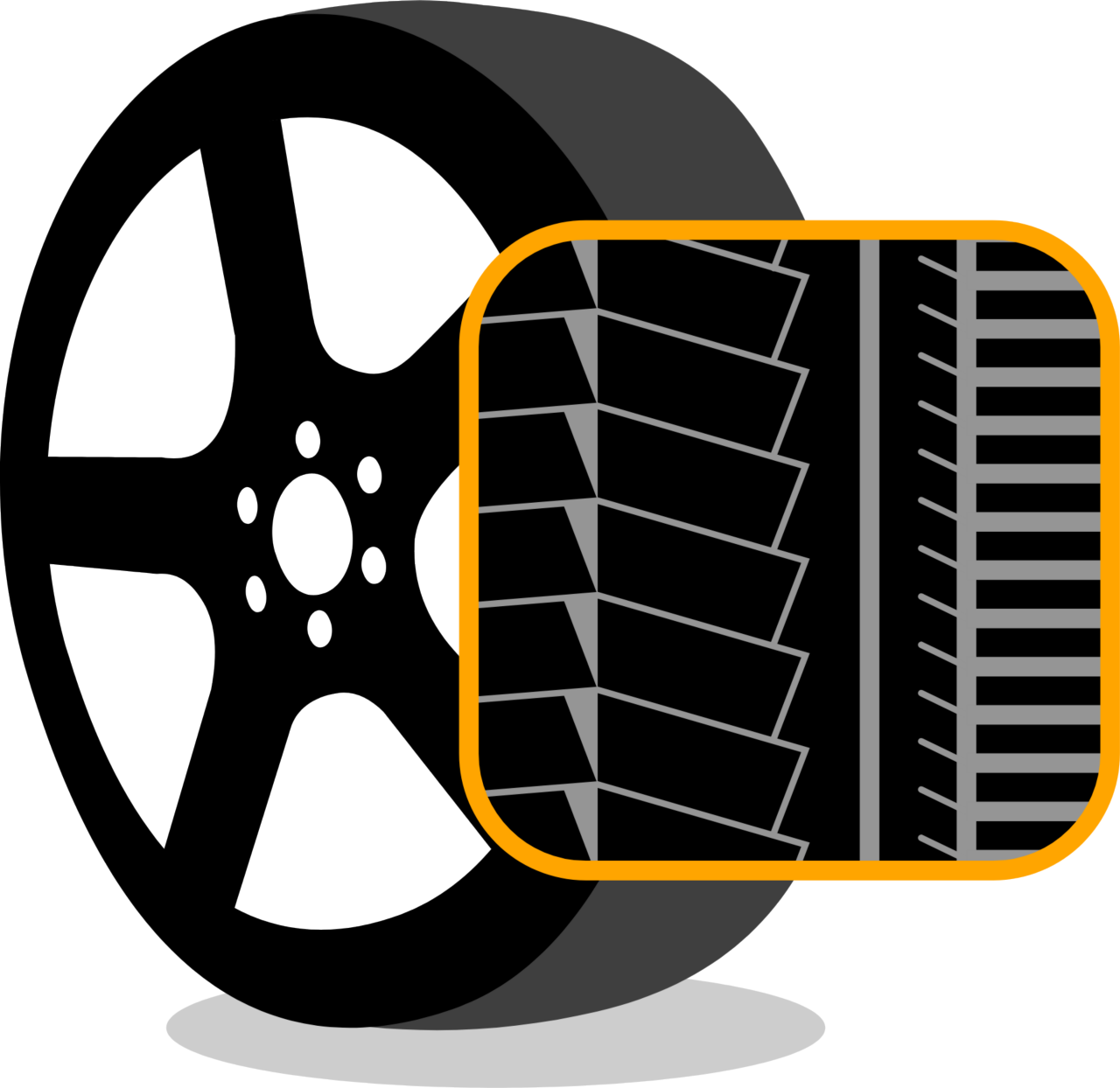
This combination of features makes asymmetrical tyres especially popular for use on ultra-high-performance cars.
Key features:
However, just like a directional tyre pattern, care must be taken with tyre rotation. Vertical rotation between front and back are the options here. Indicators on the sidewall will guide correct fitting.
When buying new tyres, avoid mixing different types, sizes, or brands of tyre on a single vehicle. For best results, source the identical make and model of tyre to the ones you already have on your wheels, to maintain optimal performance characteristics.
Another thing to keep in mind when replacing tyres; We recommend all wheel positions are fitted with tyres of the same tread pattern.
As a compromise, replacing a pair of tyres is safer than replacing just a single tyre. The newest tyres should be fitted on the rear axle, and partially worn tyres on the front axle.
If this isn't possible, then drivers are advised to ensure that the replacement tyre has the same tyre tread pattern as the other tyre on the same axle. Mixing the patterns will impair the handling characteristics of your car; it could even be dangerous.
To ensure safe usage and meet specific driving requirements, tread patterns must have sufficient tread depth.
If the tread is not deep enough, your car will lose traction and suffer extended braking times. Shallow tread grooves make it harder to control the vehicle in wet weather and the chance of aquaplaning will increase. To ensure your safety, measure the tread depth as part of your regular vehicle maintenance.
The original tread depth of a new tyre can vary depending on the application and type of tyre. For example, the tread depth of new winter tyres is usually 9/32 to 11/32 inches (7–9 millimetres).
As you drive, the tread will wear down.
If your winter tyres have studs, they will also wear down with the tyre tread. Keep in mind that 2/32 inches (1.6 millimetres) is the minimum tread depth.
A tyre with less tread depth lacks grip. Braking distance and vehicle control are impaired in wet conditions. Tyres with a tread depth of less than 1.6 mm are not safe for driving and must be replaced
Please consider that safe driving in wet and snowy weather conditions is affected by the tread depth, the pattern design and the rubber compound of the tread of your tyres. On wet or snow-covered roads, braking performance will progressively decline with lower tread depths. On wet roads, there is an additional increased risk of aquaplaning with fading tread depths.
Therefore, check your tyres regularly, reduce your speed on wet and snowy roads, and consider replacing your tyres in good time.
We also recommend checking your tyre pressure once a month
Ensure your vehicle is equipped with the correct winter, summer, or all-season tyres.
Wondering how to measure or check the tread depth of your tyres? Look at the tread wear indicators or use a tyre tread depth gauge.
Tread wear indicators (TWI), or wear bars, are small, raised bars of rubber, spaced evenly through the main grooves in the tyre tread. If they are flush with the level of the tread, then the tyre should be replaced.
Several winter tyre models are equipped with winter tyre wear indicators. If they are flush with the level of the tread, the tyre is no longer suitable for winter driving conditions. In some locations they may also no longer legally qualify as winter tyres. For example, in Austria a tread depth of 4 mm is required for winter tyres.

If you have a tyre tread depth gauge, use it to precisely measure the tread depth. Insert the probe bar into the groove and push the shoulders flush with the tread. Check the top of the gauge to see the measurement. Alternately, a small ruler can be used.
Be sure to check in various locations. A misaligned wheel may result in uneven treadwear. Keep an eye open for any areas that look more worn than the surrounding surface. The tyre's tread should be judged by the lowest depth you measured.
While measuring the tread, look for cupping, or scalloping. These are small scoops, or divots, carved from the tread. They can indicate misalignment or other problems with your vehicle. Also, watch out for bulges in the tyre tread or sidewall.
If you are uncertain of the measurements or notice uneven spots on your tyre, take your vehicle to a service center.

Tyre tread patterns play an important role in improving the fuel efficiency of vehicles. Furthermore, they increase the ride comfort. Innovative tread patterns focus on lowering rolling resistance by using features that help maintain the tyre's shape and reduce uneven deformation. By using advanced materials and streamlined grooves, they ensure smooth contact with the road. The result: less energy is needed to keep the vehicle moving, leading to better fuel efficiency.
Tyre tread patterns are also important for quieter, more comfortable driving: various tread block patterns and noise-canceling technologies are used to significantly reduce tyre road noise. This also enhances passenger comfort and creates a more peaceful driving experience, particularly during long trips.