Tyre markings
Markings on the tyre sidewall are shorthand for a wealth of information including the load index, speed rating, tyre size, construction, and more.
Read more




There are three things to understand when buying new tyres for your car: size, speed rating, and load index. Making the correct selection is very important to maintain optimal performance, safety, and fuel efficiency. Fortunately, all of this information is easy to find.
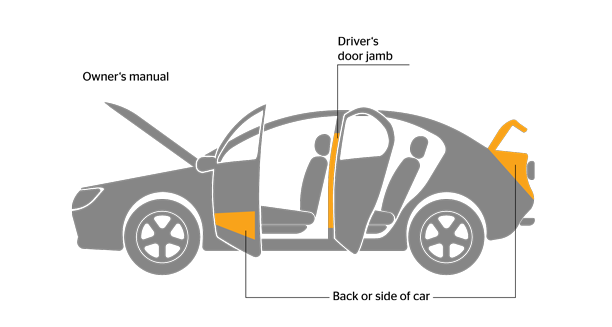
You can locate the size of your tyres on the driver’s door jamb, inside the fuel door, or inside the glove compartment. Alternatively, you can consult your vehicle documentation and tyre manufacturer specifications.
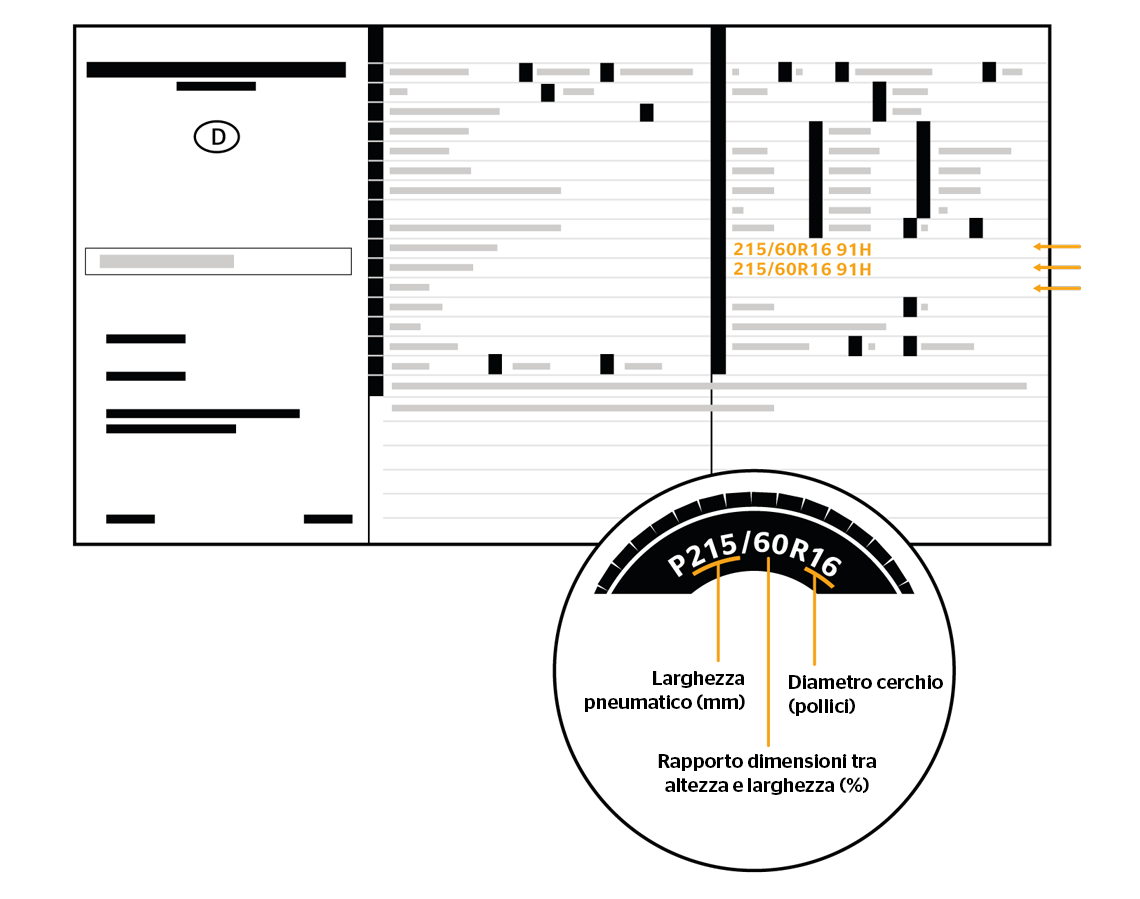
When considering tyre size, there are two simple rules to follow.
Firstly, the replacement tyres should have the same size, load index, and speed rating specification as specified by the vehicle or tyre manufacturer.
Secondly, the replacement tyres must never be of a smaller size or lower load-carrying capacity than the original specification.
The type of vehicle is also important: Standard passenger cars, SUVs, and electric vehicles have different design characteristics that influence the optimal tyre size, construction, and performance.
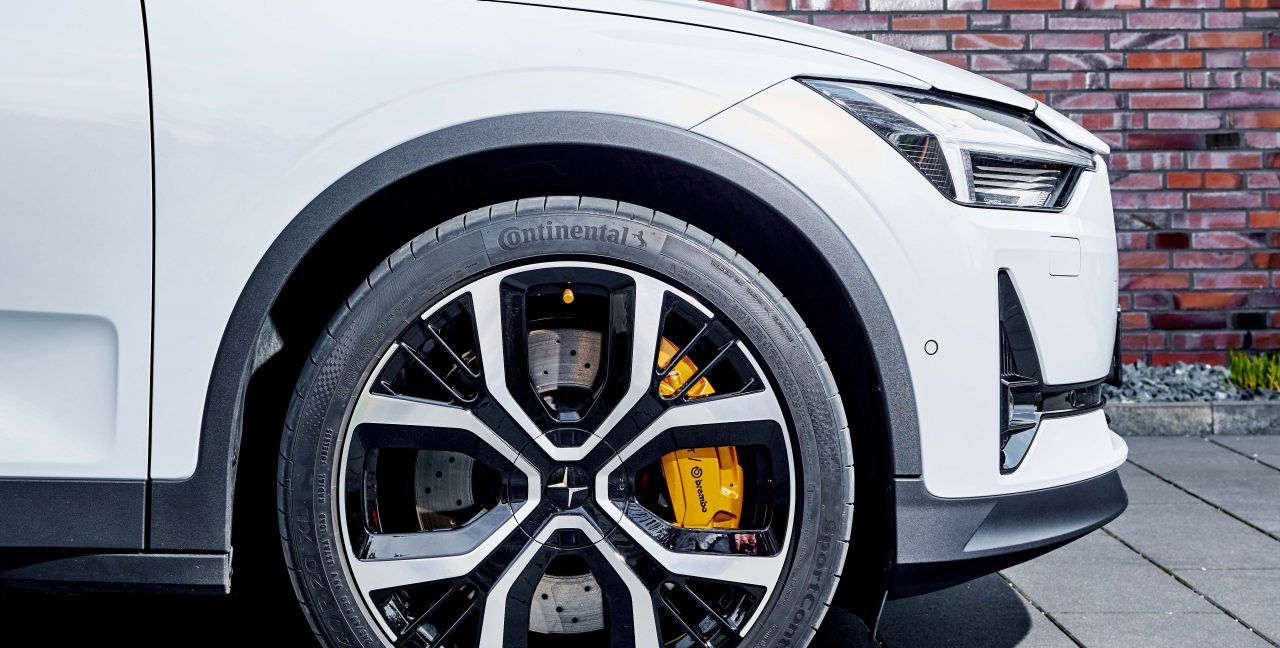
For example, electric vehicles typically carry more weight due to their battery packs and produce instant torque, which places unique demands on the tyres. For electric vehicles, it is especially important to ensure that both the tyre size and the Load Index strictly match the vehicle manufacturer’s specifications, as the higher vehicle weight and specific load requirements may in some cases require the use of HL (High Load) tyres.
SUVs and light trucks have different weight distribution, vehicle height, and typical usage conditions. As a result, they often use tyre sizes with wider widths and different load/speed rating combinations to optimise handling, stability, and durability. In all cases, always consult the vehicle manufacturer’s specifications to choose the right tyre.
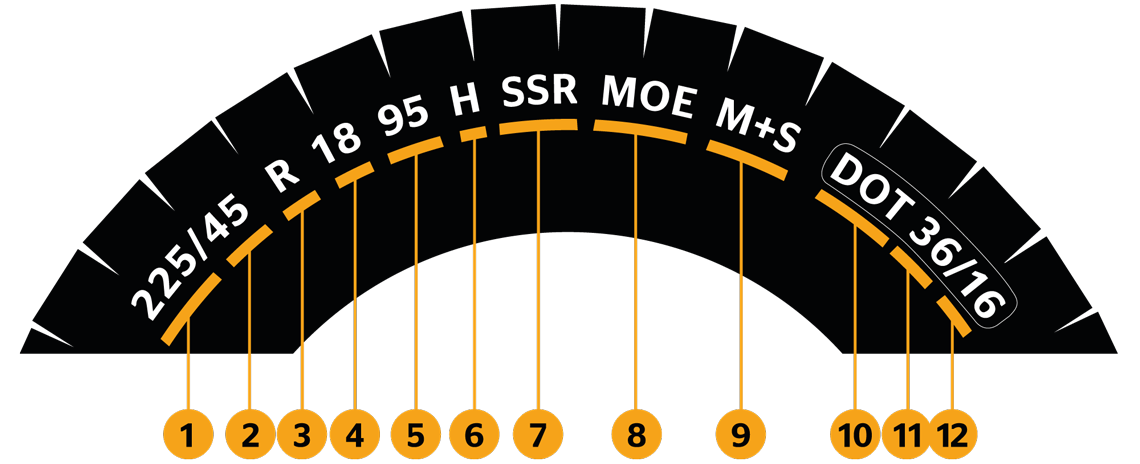
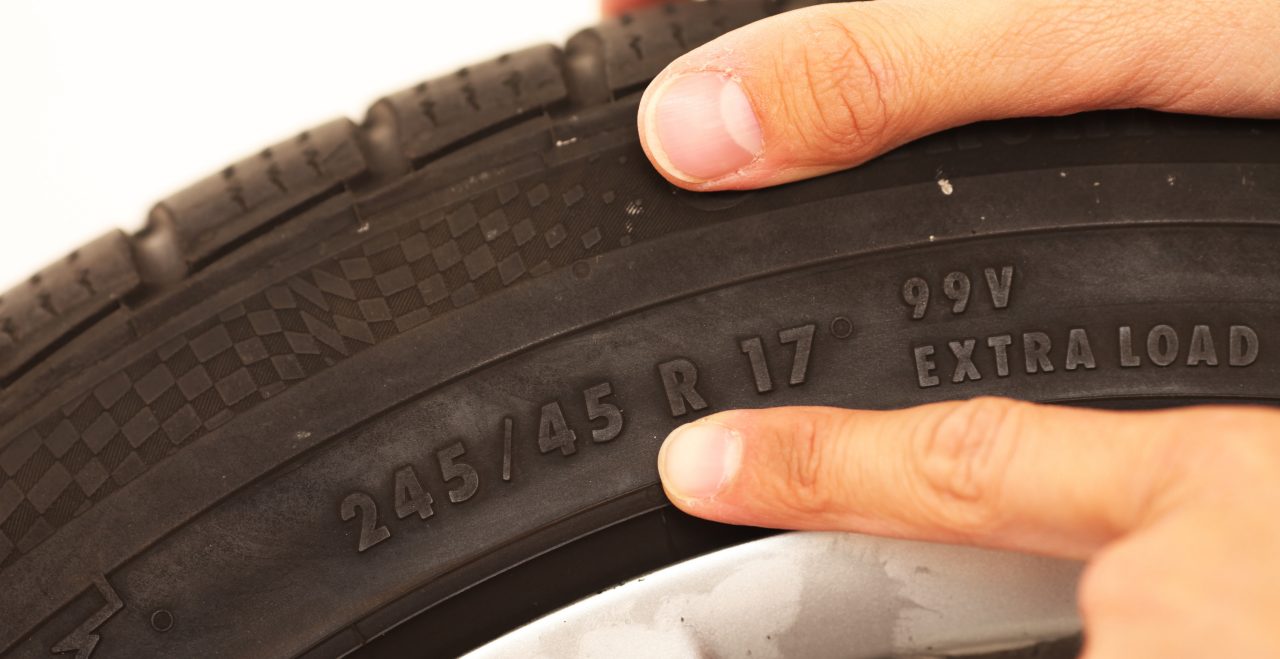
Tyre size describes the physical dimensions and key performance limits of a tyre. It tells you how wide the tyre is, how tall the sidewall is, what wheel it fits, and how much load and speed it can safely handle. This information is shown as a standardised code on the tyre’s sidewall.
But what do these letters and numbers on the sidewall mean? Here’s all the important information for your tyre size quickly decoded:
There can be additional markings on the sidewall of your tyres , which are not relevant for checking your tyre size.
Back to our example from the image above. A tyre size like 225/45R18 breaks down like this:
Together, these elements ensure that the tyre fits the wheel correctly, supports the vehicle’s weight, and performs safely at the vehicle’s intended speeds.
The documentation supplied with your vehicle outlines the recommended tyre sizes for your car. Compatibility is determined according to its outer dimensions – diameter/rolling circumference and width – and labeled as a standardised tyre size indicator on the sidewall.
Tyre size has a direct impact on how a vehicle behaves on the road. It influences safety, efficiency, comfort, and overall driving dynamics. Choosing the correct tyre size ensures that the vehicle performs as intended by the manufacturer.
Tyre size plays a crucial role in braking performance and overall safety. Wider tyres generally provide a larger contact patch with the road, which influence grip and braking distances on dry surfaces. However, they may also increase the risk of hydroplaning in wet conditions.
Tyres with a larger overall diameter can affect braking response, as they may alter the effective gearing and rotational inertia.
Using incorrect tyre sizes can lead to longer stopping distances and reduced effectiveness of safety systems.
The size and proportions of a tyre significantly influence steering response and vehicle handling. Tyres with a lower aspect ratio (shorter sidewalls) typically provide more precise steering and better cornering stability, as they flex less under load. In contrast, tyres with a higher aspect ratio offer more flexibility, which can make the ride more comfortable but reduce steering sharpness.
Wider tyres can enhance grip in cornering but may also make steering feel heavier and less responsive in certain conditions.
Tyre size also affects rolling resistance, which can impact on fuel efficiency and CO₂ emissions. Wider tyres and larger diameters generally increase rolling resistance, meaning the engine has to work harder to maintain speed. Narrower tyres with optimised tread designs typically reduce rolling resistance and may support vehicle energy efficiency.
Choosing a tyre size that aligns with the manufacturer’s recommendations promotes efficiency and reduced environmental impact.
Tyre size can influence how much road noise a vehicle produces, though it is only one of several contributing factors. This noise results from the interaction between the tyre and the pavement surface. Tyre characteristics such as tread pattern, rubber compound, construction, and size all influence the noise emitted by the tyre.
Larger, wider tyres tend to create more tyre-road contact and more complex vibrations, which can increase noise. Tyres with a higher sidewall (higher aspect ratio) can absorb road imperfections more effectively, resulting in a smoother and more comfortable ride.
Incorrect tyre size can lead to uneven wear and reduced tyre lifespan. If the tyre size does not match the vehicle’s specifications, the load distribution and contact with the road may be suboptimal.
Wider tyres may wear more quickly if not properly inflated, while tyres with incorrect diameter can affect suspension geometry and alignment, leading to irregular tread wear. Maintaining the correct tyre size, along with proper inflation and alignment, can help promote even wear and support tyre longevity.
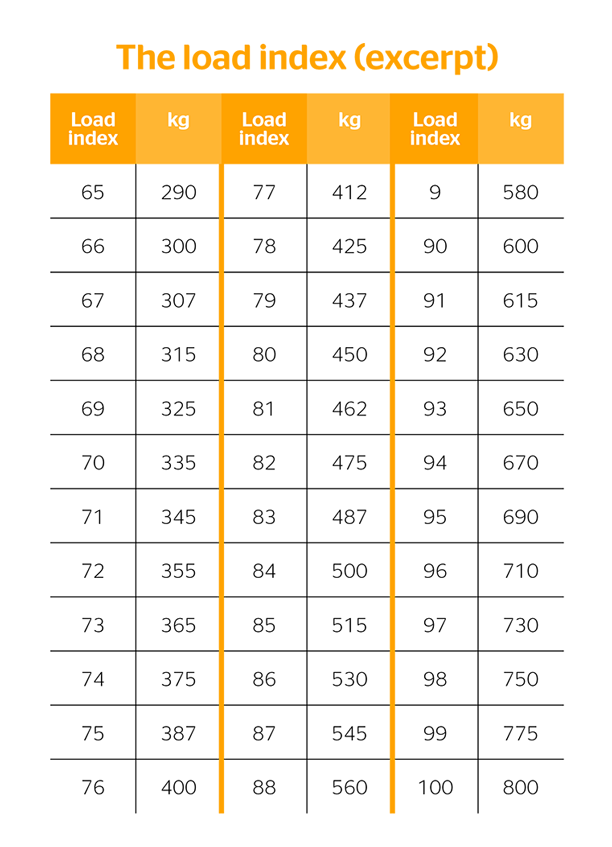
Also, the tyre size must comply with the vehicle’s requirements regarding speed rating and load index. Together, these two factors make up the service description for a passenger car tyre. It must correspond to the information provided in the vehicle documents.
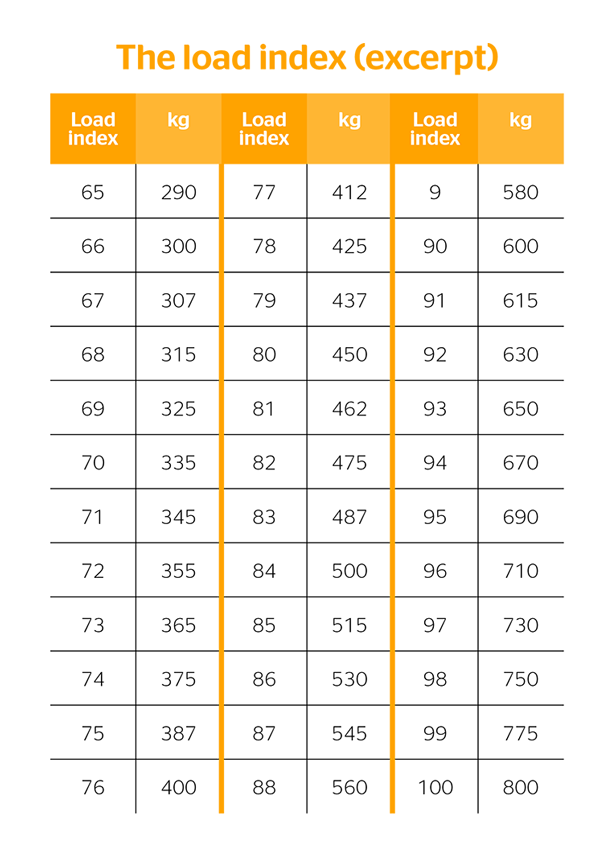
Load index
The load index rating is the maximum capacity of a passenger car tyre, calculated from the maximum permissible axle load range between two tyres.
Speed index
The speed index rating is also a relevant factor when choosing a tyre. The tyre’s speed capability must be at least equivalent to the top speed of the vehicle. Its speed rating indicates the maximum permissible speed (at full load) of a tyre, and whether it’s appropriate for your car.
When replacing tyres, it’s common to wonder whether you can use sizes different from the original manufacturer’s recommendation.
You can use alternative tyre sizes - but there are important technical and legal conditions you must follow to ensure safety and compliance. For example, make sure that any alternative size you consider falls within the range that is compatible with your vehicle’s design.
When comparing two sizes, check the diameter, width, and aspect ratio of the tyres. There are online tools that let you input your current tyre size and the size you are considering.
In addition to technical compatibility, it’s essential that the alternative size is officially permitted for your vehicle. Using a tyre size outside of what’s listed in your vehicle documentation may require official approval or inspection by a qualified professional.
If in doubt, ask a tyre professional. They can help ensure that the new tyres not only fit physically but also meet the required load index and speed rating specifications.
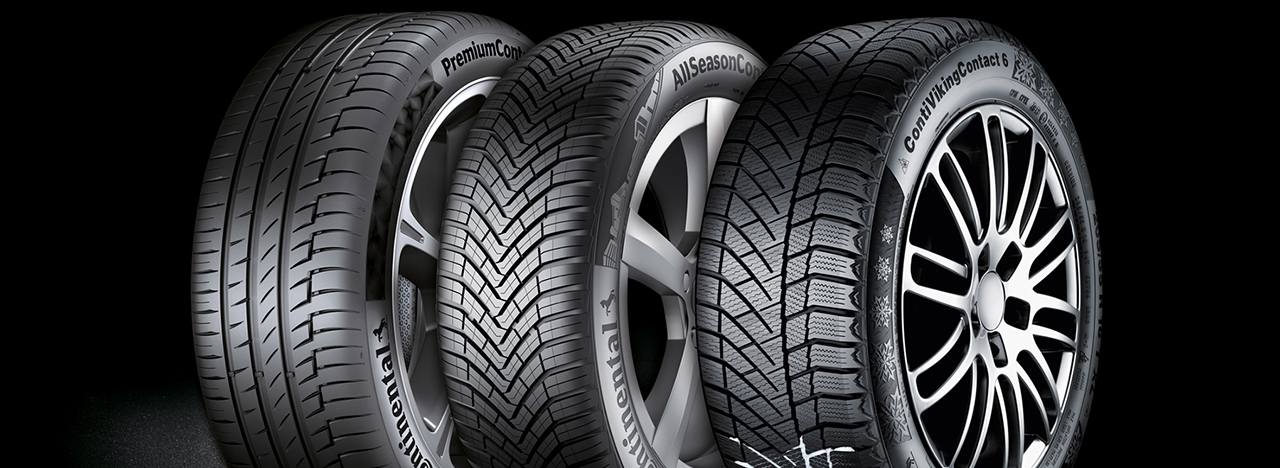
Tyre size selection can also vary depending on the seasonal tyre type you choose. Summer tyres, winter tyres, and all-season tyres are designed for different temperature ranges and driving conditions. This can influence both the recommended tyre size and service description.
In many cases, manufacturers approve different tyre sizes for winter use than for summer driving. Winter tyre setups often feature a narrower width and a higher aspect ratio, which helps improve traction on snow and slush. They may also have a lower speed index than the vehicle’s maximum speed. In many regions, this is permitted as long as the tyre’s speed rating still meets the minimum legal requirements and the driver is sometimes required to be clearly informed (e.g., via a visible sticker), depending on the market.
All-season tyres, which combine characteristics of summer and winter tyres, are usually offered in the same sizes as standard summer tyres, but not all sizes are available for every vehicle.
When talking about tyre size, it’s also critical to understand the role of tyre air pressure and how it interacts with tyre size to affect safety, performance, and tyre life. The correct inflation pressure is specified by the vehicle manufacturer based on the original tyre size, load, and vehicle dynamics and is usually found on a sticker inside the driver’s door jamb or in the owner’s manual.
When you change to a different tyre size, you may also need to re-evaluate the recommended tyre pressure. Tyre pressure monitoring systems (TPMS) may also need to be recalibrated or reset after changes in size or pressure. While the manufacturer’s pressure recommendation for the original tyre size is always the starting point, alternative sizes with different load capacities or overall diameters can require adjustments.
Maintaining optimal tyre pressure is essential because it directly influences several key performance and safety aspects:
For all these reasons, when selecting a new tyre size, you should always check and adjust the tyre pressure. Consult a professional if you are unsure.
Select your tyre size in strict accordance with vehicle documents and tyre manufacturer recommendations. If the combined wheel and tyre diameter aren’t correctly matched, there may be drastic differences in ride height and speedometer readings.
For example, fitting 17-inch-diameter wheels to a car that is designed to have 14-inch-diameter wheels will change the ride height. That means the car body will be higher off the ground. There will also be a slight increase in top speed, and the speedometer will no longer be accurate. Last but not least, the car will accelerate slower.
Switching to different tyre sizes can only be done in compliance with all legal requirements and regulations – plus the specifications provided by the vehicle, wheel, and tyre manufacturers. At the very least, the wheel must rotate freely without interference and the tyre’s adequate load capacity must be observed.
The internal construction of tyres fitted on any vehicle must either be radial or bias-ply. Fitting mixed tyre constructions (bias-ply and radial together) for cars, caravans, and other light trucks is unsafe and illegal. The only permissible exception is the use of a spare tyre for an emergency.
Concerning the choice of wheels or rims, the same guidelines apply. Motorists must use the standard wheels or rims approved by the vehicle manufacturer as recommended.
For optimal safety and performance, replace all four tyres at the same time. While it is possible to switch out less than four tyres at the same time, you should follow a couple of guidelines regarding tyre size.
If only replacing one or two tyres, for example, ensure that each one is the same size and has the same load index and speed rating as specified by the car manufacturer.
When replacing only two tyres, fit both of them to the wheels on the rear axle. The reason for this is that the newer tyres will have much better grip, particularly on wet roads, and maintaining grip on the rear axle is crucial for safety reasons.
Replacing only a single tyre is not advisable. But if replacing only one tyre is unavoidable, then pair the single replacement tyre with the tyre that has the deepest tread depth, then fit both to the rear axle.
Learn more about when it's time to replace your tyres in our guide.
There isn’t a single “magic size,” but narrower tyres with low rolling resistance generally improve fuel economy compared to wider or oversized tyres. Narrow tyres reduce the amount of rubber in contact with the road, which lowers rolling resistance and means the engine doesn’t have to work as hard.
Yes, larger tyres can be beneficial for off-road vehicles, but with trade-offs. Bigger tyres typically provide: