# Tyre Knowledge
Tyre check guide: Pressure, tread & safety inspection
How to check your tyres
Your tyres are an integral part of your vehicle’s safety, so you want to make sure they’re in top shape before you hit the road, especially for long trips. Tyre safety should be checked regularly. Some aspects, such as tyre pressure and tread depth, should be checked at least once a month, while others should be consistently monitored.
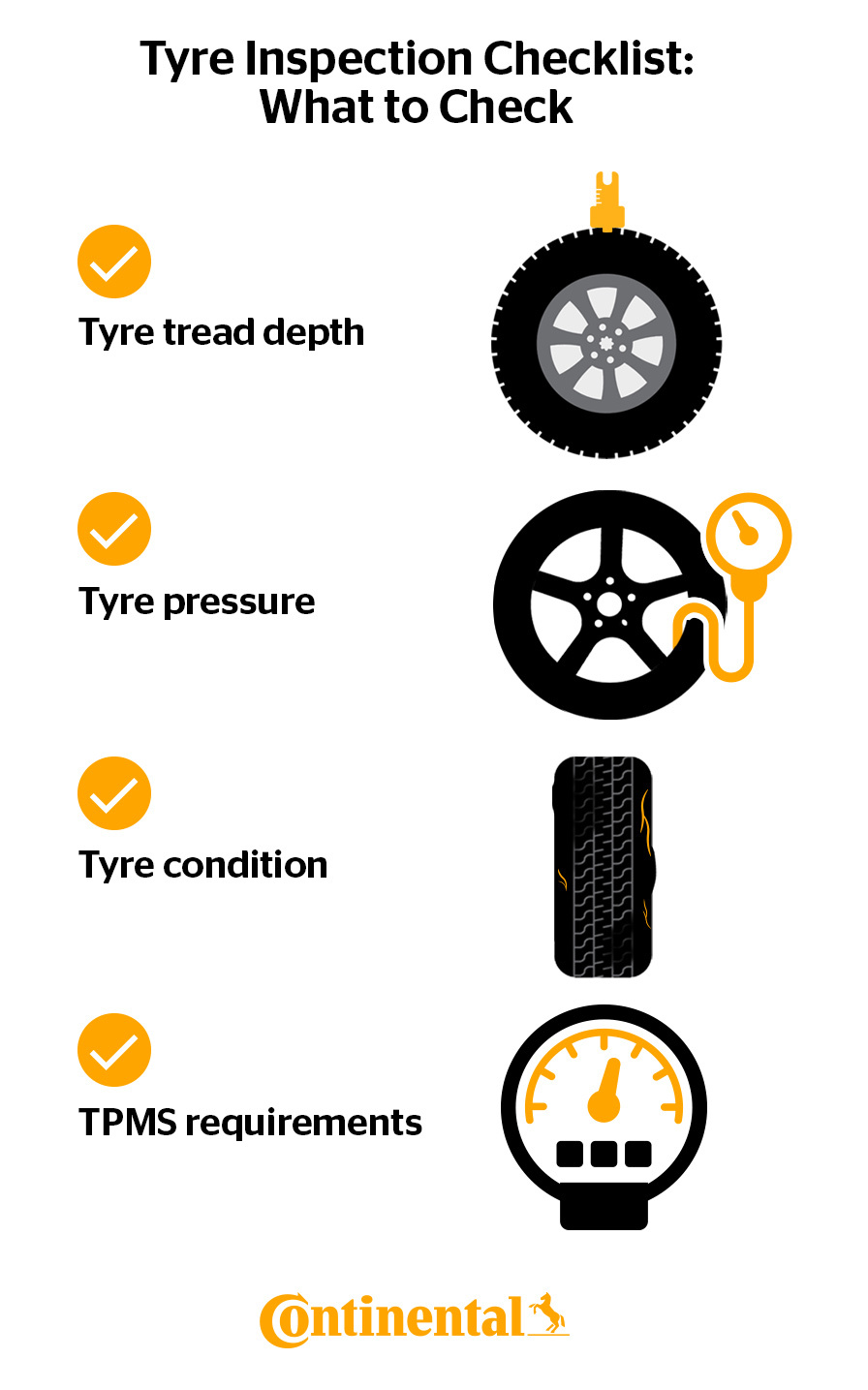
Step 1: How to check your tyre tread depth
Tyre tread depth is the vertical measurement that runs from the top of your tyre’s rubber down to the bottom of its deepest grooves. Tread depth is important for traction and braking, while also helping to channel water away to prevent hydroplaning.
In the UK, new tyres typically start with around 7–8mm of tread depth, and the legal minimum tread depth is 1.6mm across the central three-quarters of the tyre and around the entire circumference.
Drivers can quickly check their tyre tread using the 20p tyre test . Insert a 20p coin into the tread grooves, and if the outer band of the coin remains hidden, your tread depth is above the legal limit. If the band is visible, the tyre may be worn close to or below 1.6mm and should be inspected or replaced to remain road-legal and safe.
Step 2: How to check your tyre pressure
The next step is the tyre pressure check, which should be conducted at least once a month, as tyres can lose pressure over time. Underinflation can shorten your tyre’s lifespan and even cause tyre failure.
The correct tyre pressure for your car will depend on its make and model. You should be able to find the ideal tyre pressure on the driver’s side door frame, inside the fuel filler flap or in the owner’s manual, usually listed in PSI or bar. Many UK petrol stations also provide free or low-cost tyre pressure air machines where you can check and adjust your tyre pressure.
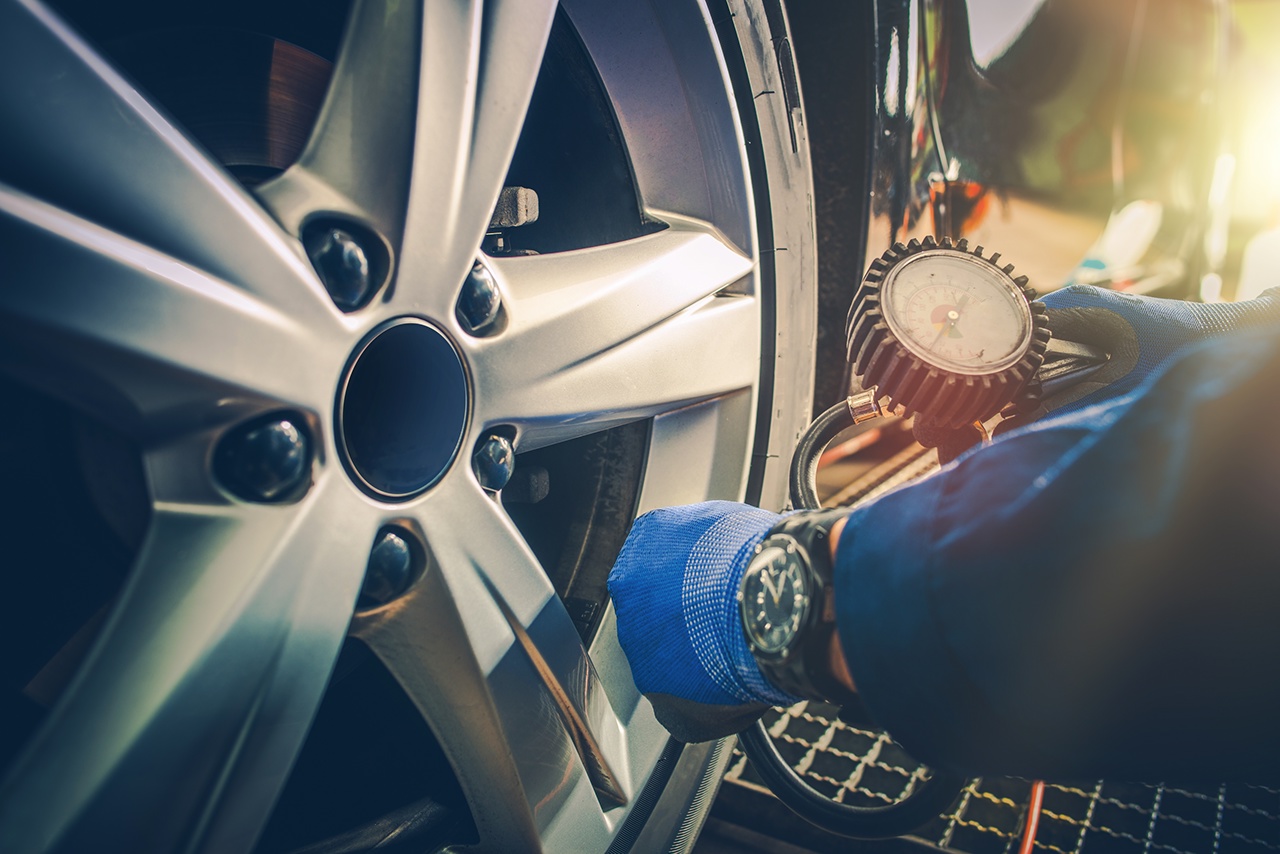
Here’s how to check tyre pressure using a pressure gauge:
- Remove the tyre valve cap.
- Firmly press the pressure gauge into the valve stem. Make sure it sits evenly on the stem and there’s no hissing sound. If you hear hissing, it isn’t pressed on the valve stem tightly enough.
- Read the measurement the gauge gives you and compare it with the recommended pressure for your vehicle.
- Replace the valve cap.
For the most accurate reading, check the pressure when the tyres are cold, perhaps after the car has been parked for a few hours. You should also check the pressure in your spare tyre regularly if your vehicle has one, as some newer cars use tyre repair kits instead of spare wheels.

Step 3: Familiarise yourself with TPMS requirements
Tyre Pressure Monitoring Sensors (TPMS) have been required in newly produced vehicles in the EU and UK since 2014. These systems are designed to continuously monitor the air pressure in your tyres and alert you if it drops below a safe level.
Your TPMS will usually trigger a warning light on the dashboard when tyre pressure falls significantly below the recommended level, typically around 20–25% below the correct pressure. However, TPMS should not replace regular tyre maintenance, and drivers should still check tyre pressures manually at least once a month.
In the UK, TPMS is also part of the MOT test for vehicles first registered on or after 1 January 2012. If the TPMS warning light indicates a fault or the system is not working correctly, the vehicle may fail its MOT. If the system stops working or a sensor battery fails, it should be repaired or replaced to ensure the vehicle remains roadworthy and compliant with MOT requirements.
Step 4: Check overall tyre condition
The final item on your tyre inspection checklist is your tyre condition.
Closely inspect your tyres for damage, including but not limited to the following:
- Cracks
- Cuts
- Bulges
- Embedded objects
- Any damage to your tyres’ sidewalls
Cracks, cuts, bulges and embedded objects can cause tread issues or structural problems that affect the overall performance of your tyres. Your sidewalls, on the other hand, absorb most of the impact when you encounter potholes, curbs and other objects on the road and can easily be damaged.
Most frequent tyre safety fails
Tyre inspection regulations vary from country to country, but there are a few common reasons why your tyres may fail an inspection or MOT test in the UK:
- Underinflation: Underinflated tyres can cause the sidewalls to flex excessively, generating extreme heat and leading to tread separation or even blowouts.
- Overinflation: While not as common as underinflation, overinflation decreases traction and can make you more susceptible to damage from potholes and other obstacles.
- Low tread depth: In the UK, the legal minimum tread depth is 1.6 mm across the central three-quarters of the tyre and around the entire circumference. Tyres with low tread depth are more prone to punctures and increase the risk of aquaplaning on wet roads.
- Sidewall bulging or cracking: A bulge in the sidewall can indicate internal damage and means the tyre may be close to failing. Cracks can also suggest the tyre has aged or deteriorated and should be replaced.
- Misaligned suspension: If your suspension is poorly aligned, it can cause uneven wear on your tyres, causing them to fail more quickly.
To prevent these issues, it’s important to check tyre pressure regularly, monitor tread depth using methods such as the 20p test and have any damage or alignment issues inspected promptly. Most of these problems develop gradually and can be avoided with regular vehicle maintenance.
How often should I check my tyres?
To ensure safety, you should check your own tyres about once a month. It’s a good idea to always keep an eye on your tyres’ physical condition, checking for any debris, punctures or cracks.
Things that can’t be assessed visually, though, such as tyre pressure, need to be checked at least once a month. Depending on the age and physical condition of your tyre, you may also want to check your tread depth once a month, but this isn’t typically needed for newer tyres.
When should tyres be replaced?
There are several things that determine when a tyre needs to be replaced; consider tread depth, physical condition and age. A tyre should be replaced when it meets any of the following criteria:
- The tread depth is below the legal limit of 1.6mm.
- There are bulges, cracks or debris embedded that could affect tyre pressure and keep it from functioning properly.
- Your tyre is between 6 and 10 years old. Manufacturers typically recommend replacing tyres over 6 years old, but 10 years is the hard limit for safety reasons, regardless of wear. To determine your tyre’s age, check the manufacturing date code on the tyre’s sidewall.
- You’re experiencing excessive vibration while driving, or you notice your tyres have uneven wear, indicating alignment issues and severe tyre damage.
Related content
-
2025/11/04Tyre pressureCar safety is significantly upgraded with an integrated TPMS. Learn all about integrated tire-pressure monitoring systems and how they work.Read more -
2025/10/09Tyre treadThere are different types of tire tread patterns which are specialized in specific driving needs like wet braking, dry handling and others.Read more