



Winter Season
Winter tyres buying guide
How winter tyres improve safety and performance
So, you're ready to buy some winter tyres for your car. Congratulations! Winter tyres have unique attributes which mitigate the risks of snow, ice, and falling temperatures on the road, providing motorists with greater control behind the wheel. In contrast to all-weather tyres, winter tyres are specially made for winter conditions.
Now that you've decided to move forward, let's conduct a bit of research. When investing in a set of winter tyres, for example, you must put them on all four-wheel positions of your car. It will maximise the handling of the vehicle and mitigate the risk of losing traction on either the rear or front axle when driving on slippery roads. Do not mix summer tyres and winter tyres on passenger cars.
Here are some more useful things to consider before you choose a new set of winter tyres.
What to look for when you are buying winter tyres
The defining characteristics of a good winter tyre are the tread pattern, the sipes, and the tyre compound. When the weather starts to get cold, and there's ice on the roads, these tyres are ready to tackle the elements.
1. Tread pattern
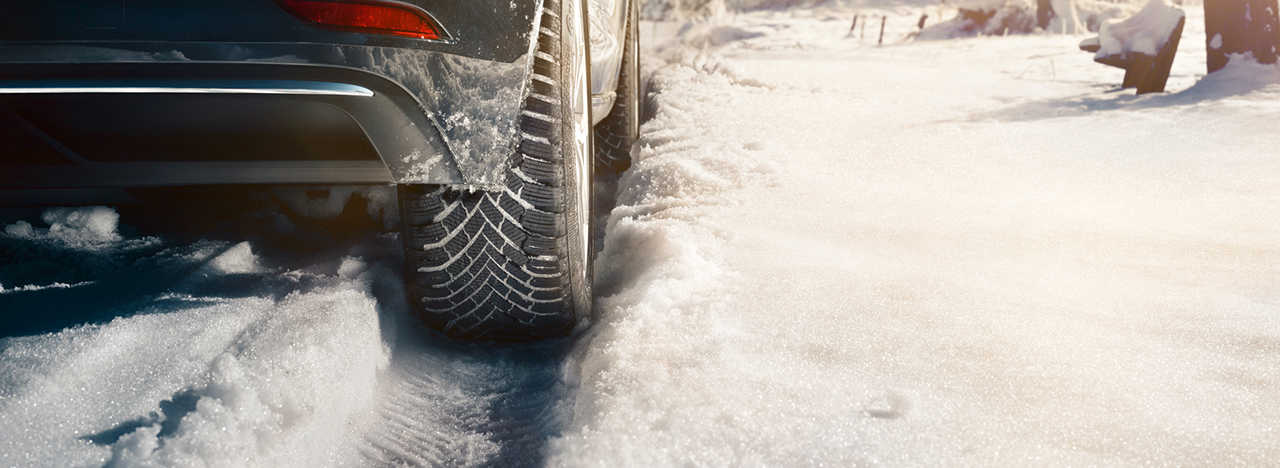
Winter tyres have a dedicated tread pattern to provide superior traction and safety on snowy, wet, and icy roads. The rotation of the wheel will push the snow into the broader grooves and generate additional traction. The tread also features sipes – tiny little slots – that provide additional traction by enabling the tread blocks to flex and add additional grip edges for improved snow, ice, or wet performance.
There are legal requirements for minimum tread depth that vary by region, particularly during winter conditions. Drivers should always verify the specific regulations that apply in their area. Maintaining sufficient tread depth is essential for ensuring traction, handling, and overall safety on winter roads.
2. Tyre compound
Finally, the tyre compound is tailored for winter performance and has a higher percentage of natural rubber, so it remains soft and flexible in cold temperatures. If the tyre compound isn't designed to perform in winter conditions – as is the case in a summer tyre – it will go hard and brittle. That, in turn, leads to a substantial decline in traction, grip and safety.
3. Winter tyre size and pressure
When buying a new set of winter tyres for your vehicle, be sure to check the size specifications as provided by the vehicle manufacturer. These details can be found in the owner's handbook, the door frame on the driver's side, or under the fuel cap. You can also find the correct tyre sizes in the CoC document (Certificate of Conformity).
To keep things simpler, using the same tyre size as the original equipment (OE) tyres is the best course of action.
- For winter tyres, the recommended tyre pressure in PSI or bar is the same as for summer tyres. Again, you can consult the owner's handbook, the driver's side door frame, or under the fuel cap for this information. It’s impossible to avoid fluctuations in tyre pressure; for every drop in 10 degrees in air temperature, the tyres will drop one PSI (0,1 Bar).
- While you can’t avoid fluctuations, it is recommended to compensate for the temperature drop with +0.2 bar for winter tyres in the winter period to prevent the air pressure getting too low in cold temperatures.
The important thing is to monitor your tyre pressure every two to four weeks and top it up as necessary. Driving with under-inflated tyres impacts fuel economy and tread wear, compromises safety, and could even lead to a puncture.
Winter tyre sidewall markings: Which symbol should you look for?
You can identify winter tyres by the symbols on the sidewall. You can also find the symbols on the EU tyre label.
These are the M+S symbol and the three-peak mountain snowflake (3PMSF) symbol, and both are industry standards. Until recently, the well-known M+S mark was sufficient as a winter tyre label. The 3PMSF symbol (snowflake) has been mandatory for winter or all-weather tyres produced since January 1, 2018 and used in winter conditions.
It is now strongly advisable to use winter tyres with the 3PMSF symbol (snowflake), as they must demonstrate their performance in a standardised braking test on snow.
You should also look at the local legislation when you are buying new winter tyres. For example: In Austria, M+S is the sufficient marking for winter tyres, but 4 mm minimum tread depth is required on winter roads, while in Germany, the three-peak mountain symbol is mandatory and a minimum tread depth of 1.6 mm is required.
1. M+S symbol

It stands for “mud and snow”. Manufacturers use this symbol to show that this tyre model is suitable for winter conditions.
Tyres with the M+S symbol have a tread pattern, tread compound or structure that is engineered to deliver better performance in snow conditions than a regular tyre, especially in terms of their ability to initiate or maintain vehicle motion.
It is not a protected symbol and there are no standardised performance tests necessary for the M+S winter tyre marking. So, there is no guarantee that tyres with the M+S symbol provide the necessary grip and safety in winter driving conditions.
2. Three-Peak Mountain Snowflake symbol
The three-peak mountain snowflake symbol is a more stringent certification that identifies winter tyres according to UNECE regulations (valid in the EU and various other countries) and the tyre regulations of the USA and Canada. The snow performance of these winter tyres is proven by objective tests to meet or exceed defined limits. These tyres provide high performance with regards to safety and control on snow, on icy roads, and in general at low temperatures.

3. Ice-Grip Pictogram
The ice-grip pictogram is assigned to winter tyres that demonstrate exceptional performance on ice in a standardised test. These tyres are engineered specifically for driving on icy surfaces and compacted snow, and are intended for use only in very harsh winter climates (such as the extremely low temperatures found in the Nordics). Using ice-grip tyres in milder conditions—like wet roads or warmer winter temperatures—may lead to reduced performance, particularly in wet grip, handling, and wear.

Explore our winter tyres in detail
Winter driving conditions require more than just careful navigation – they demand the right tyre for optimal safety and performance. Whether you're tackling snowy streets, icy highways or wet winter roads, Continental offers a wide range of winter tyres to meet every driver’s needs.
FAQs
Winter tyres typically last between 3 and 5 seasons, depending on driving habits, mileage, road conditions and proper storage. In average use, a winter tyre offers 25,000–40,000 miles (40.000–64.000 km) of effective performance. What affects winter tyre lifespan:
• Annual mileage and driving style
• Road conditions (snow, ice, wet, dry)
• Tyre pressure and vehicle alignment
• How they’re stored during warmer months
• Rubber ageing over time