Winter vs. all-season tyres
What’s the difference between winter and all-season tyres? Learning the design considerations behind tyre types can help decide which ones you need.
Read more




If you were to look at tyre track markings left in dirt, the distinctive patterns may remind you of a shoe print. And, just like comparing the prints left by winter boots and summer shoes, you can work out which are snow tyres, and which are summer tyres. Along with other tyre features, the unique patterns designed for winter tyres influence your vehicle’s traction, grip and brake performance – especially on ice, wet surfaces and in snow.
In this article, we’ll investigate why tyre patterns are so distinct and why tread is especially important for winter tyres.
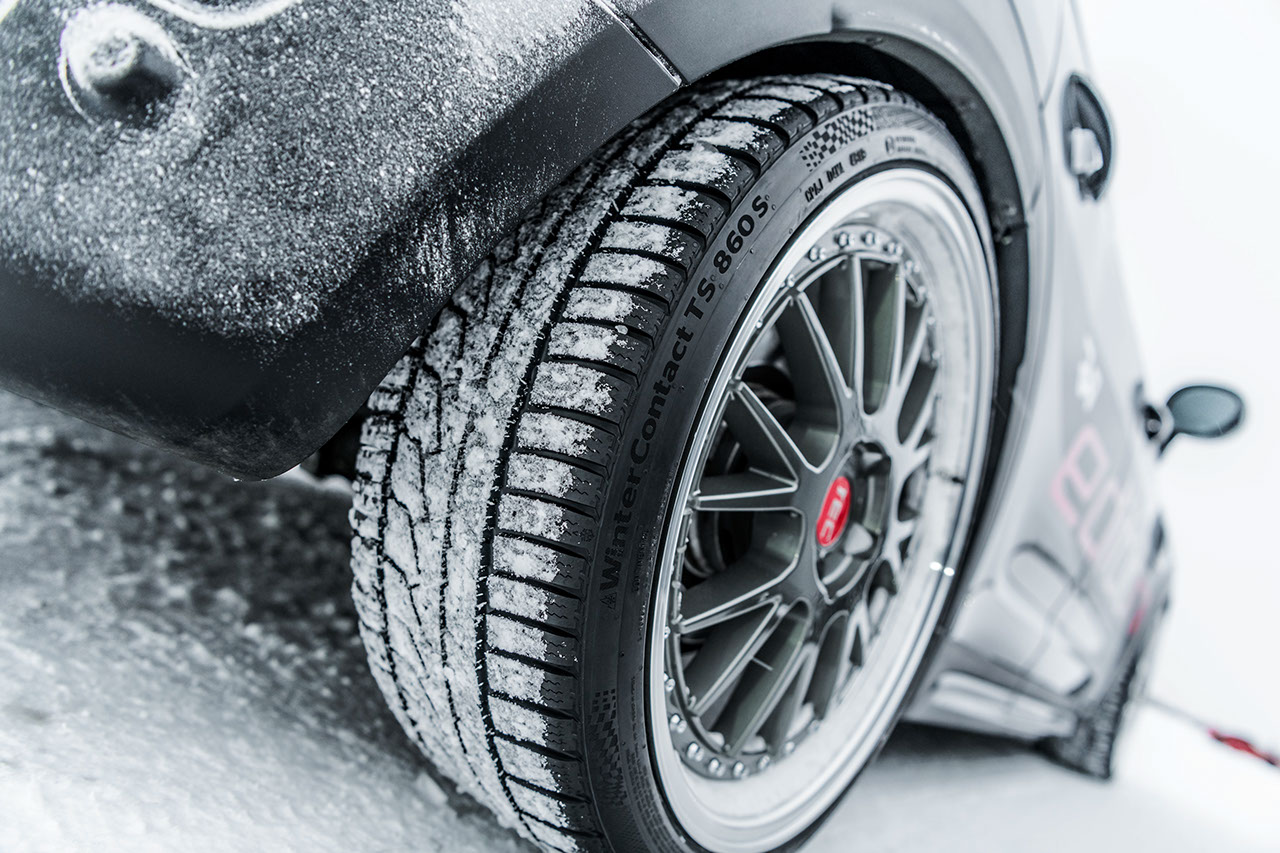
In harsh winter conditions, a tyre’s tread pattern enhances a vehicle’s grip and handling on icy roads. It is formed from four main divisions:
Tread blocks are raised rubber sections that have direct contact with the road and which eventually wear down over time.
Sipes are very thin slots cut into the tread block. They provide extra traction in wet weather, snow and ice.
Grooves, continuous ruts that run around the circumference of the tyre to effectively channel away water, are deeper in winter tyres to help reduce the risks of aquaplaning and generally create more traction.
Ribs are the raised rubber sections that run around the circumference of the tyre to help improve steering in snow, on ice-covered surfaces and wet roads.
While these four main divisions help form a tyre’s pattern, there’s a fifth element that makes all the difference for winter tyres – the tyre compound. Winter and all-season tyres are made from specially formulated natural rubber compounds that are softer and more flexible than compounds used in summer tyres. That way, they’re able to offer much better grip and traction in lower temperatures. The winter tyre tread design offers its benefits especially on roads covered with snow or ice. The snow gets pressed into the wider and deeper tread grooves, utilising the effect of shear forces on snow for additional grip. The wider grooves can also absorb more slush than summer tyres and ensure more contact with the road surface.
Learn more about the differences between summer and winter tyres. Overall, these five elements work together by interlocking and biting into snow and ice to provide additional traction and improved braking.
As mentioned above, winter tyre patterns have larger, deeper grooves and additional thin channels known as sipes. This combination allows greater brake control, traction and safety when driving in snow or on icy and muddy road surfaces. Additionally, when snow gets compacted into the deep grooves, this helps create further traction.
The performance of an all-season or winter tyre depends largely on the tread depth. As tyre tread wears down over time, its ability to maintain grip on icy roads decreases. To ensure optimum driving performance and more importantly driving safety, your tyres should always have sufficient tread. Always consider the legal regulations of your country and take into account that tyre performance decreases with tread depth, especially in winter conditions.
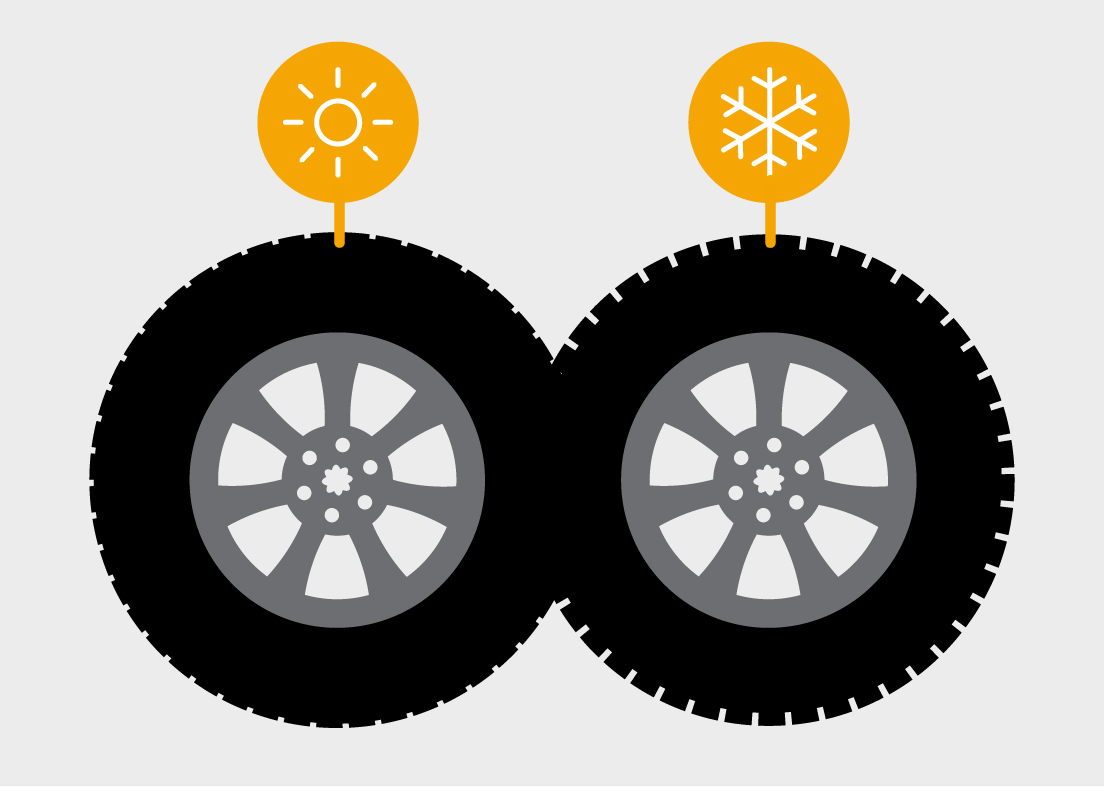
Specialised compounds: Unlike all-season rubber that hardens in the cold, winter tyres stay flexible in sub-zero temperatures to maintain grip.
Enhanced traction: Winter treads feature a high sipe density and aggressive grooves to bite into ice and eject slush more effectively than all-season designs.
Performance focus: While all-season tyres are a compromise for year-round use, dedicated winter tyres provide significantly shorter braking distances on frozen roads.
For a deeper dive into these differences, read our full comparison on winter tyres vs. all-season tyres.
You should aim to inspect your tyre tread depth at least every two weeks, along with your tyre pressure. Regular checks ensure the tread on your winter tires is ready for winter safety. You can accurately check your tyres using these common methods:
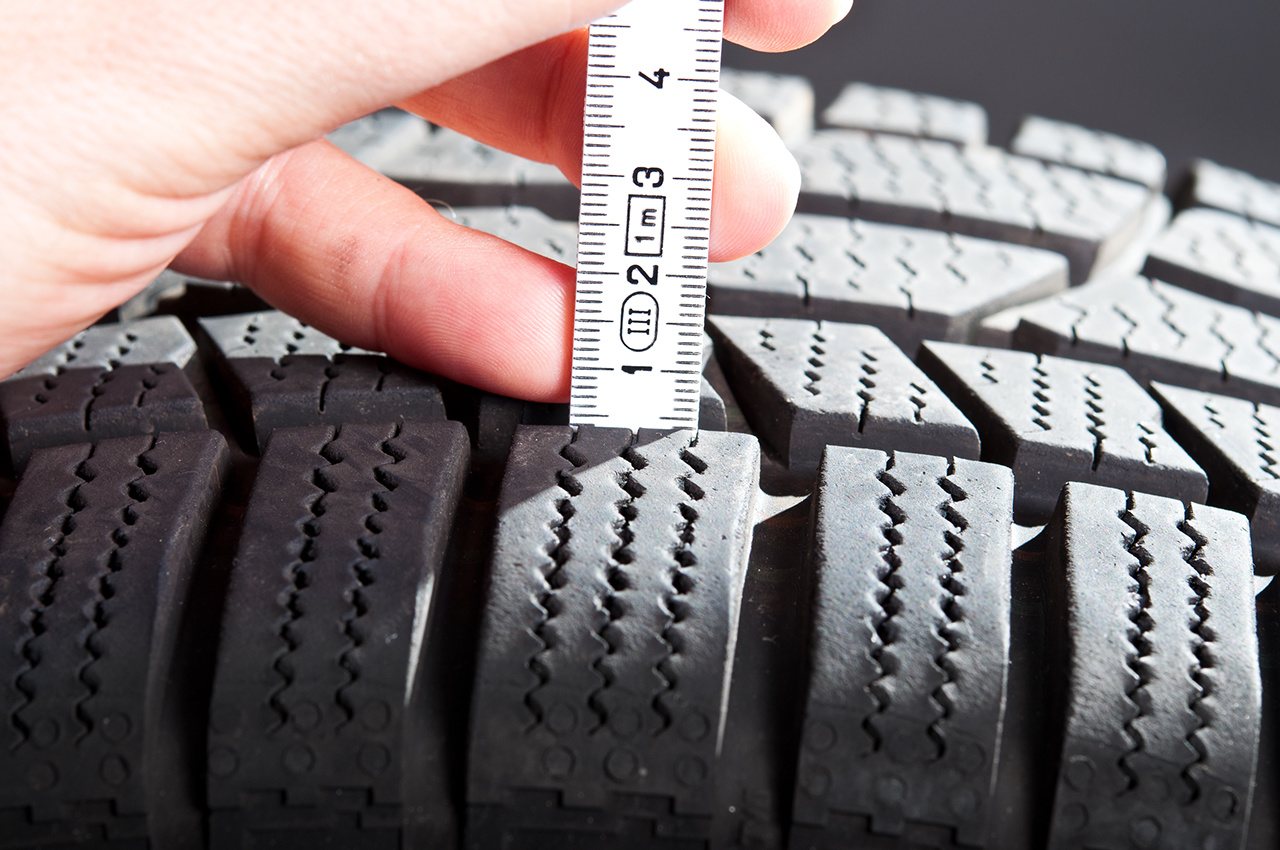
Use a tread depth gauge, inserting the probe into the groove and pushing the shoulders down to the surface of the tyre. Do this across several sections of the tyre and ensure the tread depth meets the legal requirements in the country you are driving in. If it's below this measurement, it's time for new winter tyres. In a pinch, you can also use a small ruler to check the tread.
Check your tread wear indicators, sometimes referred to as wear bars. All tyres are manufactured with a series of small rubber bars embedded in a section of the tyre grooves. Once the tread is worn down, these bars are flush with the level of the tread pattern. This means the tyre has reached its limit of winter suitability and it is now time for new tires. Note: You may need to rotate your tire a few times to find the wear bars.
If you don't have a gauge at hand, common coins provide a quick diagnostic. While not a millimeter-precise measurement, they are excellent for a "pass/fail" safety check. Insert a 20p coin – if you can see the line of the coin, you are at the legal limit of 1.6 mm.
When checking your winter tyre tread, look for any damage such as unusual bulges, small scoops and divots in the tyre. They could indicate that your tyres are misaligned or that there may be other problems with your vehicle. If you do find any damage, visit your local tyre specialist as soon as possible for a thorough check. You should also check the conditions of your winter tyres when you prepare your vehicle for the cold season.
Yes. Some winter tyres have a directional (V-shaped) pattern designed to rotate in one specific way to effectively channel slush and water away. If installed backwards, the tyre cannot clear debris properly, significantly increasing your risk of hydroplaning and reducing traction. Always check for the rotation arrow on the sidewall to ensure that they are mounted correctly.
On average, winter tyres last between three to five seasons (up to five years), or about 20000 to 40000 miles. Their lifespan depends on the rubber compound, your driving habits, and whether you change the tyres promptly when the temperatures rise.
Winter tyres wear out faster in warmer temperatures. They are made from a specialised soft rubber compound designed to stay flexible in freezing temperatures. When driven on warm, dry pavement, this soft rubber creates more friction and heat, causing the tread to wear down much faster than a summer or all-season tyre. Winter tyres that are used during summer temperatures have significantly less grip than summer tyres.
Yes. While AWD helps with acceleration and getting moving in snow, it does not help with braking or cornering. The specialised tread and sipes of a winter tyre are what provide the grip needed to stop and turn on ice, regardless of your vehicle’s drivetrain.